
- What we do for you
- About Us
About Us
- Why Choose Us
Why Choose Us
In-house Equipment
Other Important Topics
- Resources
Resources
Blog & Social Media
- Contact Us
- What we do for you
- About Us
About Us
- Why Choose Us
Why Choose Us
In-house Equipment
Other Important Topics
- Resources
Resources
Blog & Social Media
- Contact Us
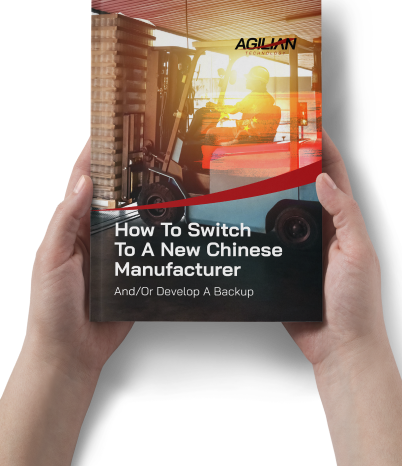
How To Switch To A New Chinese Manufacturer And/Or Develop A Backup Supplier
Last updated: October 29, 2026
An introduction to how to switch to a new Chinese manufacturer safely
Introduction
If you’re currently working with a Chinese manufacturer who produces your goods, this guide will serve as a wakeup call that accepting results from them that don’t reach your expectations sets you on a risky path which could result in higher costs, poorer quality, delayed deliveries, disappointed customers, and more.
Is switching suppliers really necessary?
After going through the sourcing process, on boarding and training a supplier, possibly doing heavy product development, and getting to the point where you’re manufacturing your product, the thought of going through the entire process again, unless in an emergency, is daunting.
But, how many companies have received batches from their Chinese supplier with a few too many defects,but have let it go and continued to place orders in future because they needed to fulfil orders urgently? How about where suppliers have been a little late delivering on a number of occasions?
Fundamentally, letting things slide is dangerous. Problems can always occur unexpectedly so, as an importer, you can’t expect absolute perfection 100% of the time, but if a supplier has gone outside of your pre-agreed conditions and standards or if you’re regularly dissatisfied with their performance, this is not something to overlook and you should consider sourcing and developing a new supplier either as their replacement, a second source, or a backup supplier.

What’s the solution?
You may need to switch to a new Chinese supplier if your incumbent supplier isn’t reaching your expectations.
Yes, it’s potentially a difficult process, for a number of reasons that we’ll go into in this guide, but we’ll also show you how to make the process easier by sharing our advice which has proven to work during a couple of decades of dealings with Chinese manufacturers of all kinds of products.
7 Reasons that show it’s time to switch suppliers
It’s very common that customers come to us and complain about their current supplier. They ask: “How do we control production better?” Once they have given a number of examples of how their current Chinese manufacturer is failing them our response is often: “you need to switch to a better supplier.”
It’s true that switching suppliers can be a difficult and treacherous process, but it isn’t insurmountable with the right preparation.
Why importers are put off switching suppliers
There are a number of reasons why importers get trapped in a rut with ‘bad’ or unsuitable suppliers, and, in some cases, they keep their dysfunctional supply chain in place for years!
In particular, the following time-consuming activities are off putting and can lead to importers keeping sub-standard suppliers on board:
- Identifying and vetting new factories
- Onboarding and training them once they’ve been accepted
- Waiting for them to adapt their internal processes to suit your production
- Waiting for them to find new sources and sub-suppliers for components, etc
- Waiting for them to ramp up production
- Your concern that they won’t be any better than your current supplier

Furthermore, if you don’t have solid and enforceable agreements with your current supplier, they may cause you trouble if you try to switch, such as withholding your tooling, stock, or materials. The worst case scenario is that they sell your product to direct competitors.
All of these seem like good enough reasons not to ‘rock the boat’ and switch suppliers, but if you decide to keep the status quo and persevere with that supplier you stand to lose sleep, lose customers, and make a lower profit overall than you should. Keeping the status quo takes a huge toll.
So, when is it truly worth you going through the process to source and switch to new suppliers? Start with these 7 reasons:
1. The quality is not acceptable
This is probably the most common sign of a bad supplier. You receive batches of products that are markedly substandard.
Over the years, we ended up with a simple rule of thumb: if the first batch made by a factory is not acceptable, switch now! Giving a re-order is usually a big mistake. Many people seem to agree.
There might be a variety of reasons for it, but none are good excuses:
- They don’t understand your standard and your requirements (did they even ask?)
- Their main customers operate in a market that can accept much poorer finishing than yours (did they try to communicate the standard they were comfortable achieving?)
- They received components (or even whole products if they subcontracted the whole process), didn’t inspect quality, and/or decided they wouldn’t try and fix it.
(There are, of course, also good excuses. For example, your product design is far from mature and couldn’t be made consistently within specifications. Or you directed a component supplier that messed up. However, good factories will often detect it and let you know.)

2. They raise prices very fast without clear justifications
That is, unfortunately, a common problem. They see you as a cow to milk for all its worth.
They don’t give you a P&L statement about what their margin is on your product. They don’t even give you any firm number. They mention a rise in the cost of some materials, higher wages, a lower RMB… and they bump the price you pay up by 10% or 20% a year. And it usually leads to haggling exchanges. “I can pay a bit more, but no more than 3%”, “We can make a big effort and raise only 10%, but we’ll make no money”, and so on.
That’s unpleasant and usually unsustainable in the long run. As the buyer, this should drive you to build a backup supplier in order to have an alternative (and to jump ship completely if the current supplier gets too unreasonable).

3. You find out that they have used your IP without authorization
This is not very common (fortunately) and is not always easy to prove, but it does happen and it is absolutely shocking. (See 10 examples of IP theft).
You spent resources designing your own product. You worked with a manufacturer to develop and make it. And yet, you find out that they also sold it to other companies. Or, even worse, that they have become your direct competitor on your market. We have seen buyers get very upset and nasty in this case, ending the relationship immediately.
Other buyers keep their cool, don’t divert orders away from that reckless supplier, and discreetly start looking for a new source for their new products.
Both reactions are understandable, and each may make sense depending on the buyer’s business model…

4. The manufacturer keeps making changes without your authorization
Many Chinese factories operate on the principle that “the customer pays to receive finished products, and we don’t need to tell them HOW we do our work”. Unfortunately, that causes many expensive surprises for the buyer.
This may take several forms:
- Unauthorized subcontracting, even though one manufacturing facility was audited and authorized. This usually leads to very inconsistent quality.
- Unauthorized change of a key component, usually because they found a cheaper source or because it will make assembly easier. This often has implications that the manufacturer thinks are negligible… but in some cases, they can make the product unsuitable for sale/use!
- Unauthorized change in a process, again in order to save money or make things easier. And again, with consequences that might be very expensive.
If they don’t have a proper process for managing engineering changes, do you think they will set one up just for you? And do you think their purchasers, their engineers, and their production supervisors will follow that process every time they want to make a change? That doesn’t sound realistic.

5. They are in dire financial straits
You may see or hear many signs that your key supplier is not in a stable financial situation. You might notice that they lost their No. 1 supplier. They might mention they rented some of the floors to another factory, as they need less space. They may owe money to their own suppliers. Some key staff are leaving. And so on.
The risk for you, the buyer, is obvious:
- They might collect an advance payment on a production and then shut down.
- If they use tooling that you paid for, you are unlikely to be able to get it back. It might be sold for scrap by unhappy creditors and employees trying to get some money back.
- Same thing for materials, semi-finished products, samples, testing equipment, etc.
If it will take you 6 months to onboard and train a new supplier, and if you only have 2 months of inventory, imagine your supply of products is interrupted suddenly. That might be a disaster.

6. Evidence of serious ethical/social/environmental wrongdoing
If you are worried about bad press, or if you simply can’t accept certain types of wrongdoing, this might be the trigger that drives you to work with a new factory.
We have seen all sorts of bad behaviors, from very dangerous working conditions (think ‘pouring molten metal while wearing a T-shirt’) to dumping chemical waste in rivers. And some factory owners operate on such a short term view, they are unwilling to change their approach.
Don’t keep working with them. They probably apply the same shady mindset when managing your product quality and your confidential information.

7. A different supplier is a more attractive option (cost/processes/ability/etc)
And finally, the obvious… You find a new supplier that is clearly better than your current one.
- Maybe they give you a simple and clear pricing structure and give you an attractive quotation.
- Maybe you develop new products regularly and you need to rely on a factory that has a strong NPI process.
- Maybe they have a strong quality system, clear visual management systems, and well trained staff.
We could keep going, but in short, this new supplier has what you need and can respond to your needs markedly better.
Some additional factors that contribute to the need to switch suppliers
To add to these 7 common reasons, there are factors that make it even more important to switch. Here are a few typical ones:
- The current supplier refuses to sign a fair and balanced manufacturing agreement, meaning that they are not motivated to get any better.
- You are given only one contact window, which is not cooperating well, and you can’t get in touch with anybody else. (That leads to serious risks, as that person might leave or become disinterested in your projects.)
- When discussions get heated, they outright threaten you to take your products and/or tooling hostage. This is absolutely shocking (as long as the buyer has held their end of the deal), but it happens more often than one might expect.
- Do you have all the engineering design files that will be needed to fabricate the custom components?
- In many cases, the supplier sends files that, alone, are basically useless. For example, for the electronics, they export the PCB layout in pdf, so they can say “here is the board information”, but they don’t send the schematics and the list of components.
- Another common reason for this is, your supplier may have outsourced both the development and the production of certain parts or subassemblies. In that case, your supplier may also be unable to get the engineering design files.
- Do you have the bill of materials with details (for each component, who the supplier is, what the price, lead time, and MOQ are, and so on)?
- This is similar to the previous point. Typically, it is considered highly proprietary. And it would allow you to estimate how much margin the assembly supplier is making.
Related :- In this podcast episode our Executive VP discussed 7 ways in which suppliers can cheat or cause problems for importers which will give you more information on what to look out for from your current suppliers.
Are you dissatisfied with your current Chinese supplier?
We know it’s a big decision to switch to a new supplier, so to make it easier we’ve created an assessment where you answer a series of 8 simple questions about your relationship and results from your current supplier and will be provided with a tailored response from us about if you truly should consider switching suppliers right now.
It’s free and there’s no download required. Hit the image below to take the assessment:
Unhappy with your current manufacturer?
You have product(s) in production, but your current setup is no longer delivering the quality, visibility, or reliability you need.
- Inconsistent quality or recurring defects
- Poor visibility into production status, quality data, and costs
- Reactive communication and slow problem resolution
Developing an innovative product?
- Product design needs DfM/DfX review before tooling
- Quality, cost, and compliance risks must be reduced
- You want a structured path from DFM to ramp-up

Planning to make the switch
So, if any of the reasons from part 1 have prompted you to decide to switch to a new Chinese supplier, how do you manage the process of transferring production between them and when is the right time for you to break the bad news to your current supplier? That’s what we’ll explore next.
1. First, be clear about who owns the product
In business terms, and to simplify a bit, I would say you own the product if you came up with its design and you funded all its development. By contrast, if you picked a nice sample on the Canton Fair and re-sold it in your country, it is definitely the supplier’s product (you are just a ‘distributor’).
In legal terms, it is more complicated. Unless your supplier has signed a development agreement that says otherwise, there is a very real possibility that the supplier has a claim over ownership of part/all of the IP rights.
What are the implications?
- If you are distributing a product that you don’t own, should you ask another factory to make it? I know this has been done many, many times in China. But is it the right thing to do? And are you sure you are not exposing yourself to a lawsuit?
- Can you forbid your current supplier from selling the same product to other companies? If they believe it is their product, they won’t think your position is fair, and they will probably NOT want to lose business opportunities.
- If you request the product design files (CAD drawings in STEP format, schematics and GERBER files for the electronics, and so on) but you didn’t pay for them, the supplier is not likely to send anything to you for free.

2. What does your manufacturing contract with the current supplier say?
Look for certain clauses:
- Tooling list, ownership, and right to pull at short notice — very common if you (the buyer) have paid for the tooling.
- Termination under breach of the agreement — the criteria to fulfil should be clearly laid out, the buyer should be able to terminate the agreement in case they are not fulfilled, and the modalities of who does what should be defined.
- Termination without breach of the agreement — in case the buyer decides to terminate the agreement, again, the modalities should be clear.
- Manufacturer’s obligation to provide certain information with a certain amount of detail — in addition to the design files I mentioned in the previous point, try to get the bill of materials (including the suppliers’ contact information).
- Manufacturer’s obligation to provide training, or technical support, to their replacement for a reasonable fee — this is not very common, but you might be able to negotiate it if your business is very attractive.
We are no experts on this topic. All this is solely based on our past experiences. Make sure to talk to a lawyer specializing in China business law.
In the remainder of this section, we will assume you do NOT have a manufacturing agreement that can be enforced on your supplier. An awful lot of importers are in this situation.
3. Have you been clear about your level of expectations and your lack of satisfaction?
Giving a lot of work to a manufacturer without making your expectations clear, and then pulling out because they didn’t meet your (untold) expectations, is not fair. It is not good business practice. Chinese factory owners can react brutally in that case, and for good reason.
Make sure you are not in that situation. Spend time documenting and explaining your quality standard (be prepared to repeat things). Make sure managers are aware of the few things that are most important to you and be as specific as you can.
If you haven’t done that with your current supplier and the relationship has already turned sour, it is probably too late. Do it right next time!
4. Have you picked and onboarded a new manufacturer?
Let’s be clear, your current supplier will NOT help train their replacement. If the product is relatively complex, onboarding a new supplier will be a lot of work. So, don’t wait. Start now.
The process of selecting the new supplier can be a lot of work. Here are some resources to guide you:
- We distinguished between ODMs, OEMs, and CMs (like Agilian!) and listed their pros and cons to help you make a decision on what type of Chinese supplier could be better for your needs.
- Take a look at our list of 13 contract manufacturers in South China who can tackle all kinds of productions, so take a look and see your options.
- Explore the 5 questions you need to answer to assure that you’re finding the right contract manufacturer, including: Are they asking the right questions about your product? Have they promised full visibility over the sub-suppliers who will produce the components, etc? And more..
What will make the onboarding easier? If you have followed the advice we wrote above, you will have these documents, and they will be quite helpful:
- Description of your requirements, and documentation of a quality standard
- The design files, hopefully in their latest versions
- A detailed bill of materials
Ideally, you can start slowly and let them gain experience with small orders. That’s possible if you can have 2 factories making your product (without the need to relocate expensive tooling), or if you have amassed many months of inventory.
5. The delicate process of transferring tooling
 If your product includes custom parts that necessitate costly tooling, this is a topic you have to think through carefully.
If you suddenly ask to pull the tooling, it is a sure sign that you are moving manufacturing somewhere else. (To prevent that, you could start giving them the habit of pulling the tooling every time before 2 production runs.)
Have you got a written acknowledgement from the manufacturer that you own the tooling? It won’t guarantee that things will go smoothly — maybe the precious molds are at one of their suppliers, and that company believes they own the molds — but it will help. And, if it is part of an enforceable contract, all the better.
Let’s say you get an agreement. When it comes to the process of the transfer itself, you may want to follow the 8 steps outlined here.
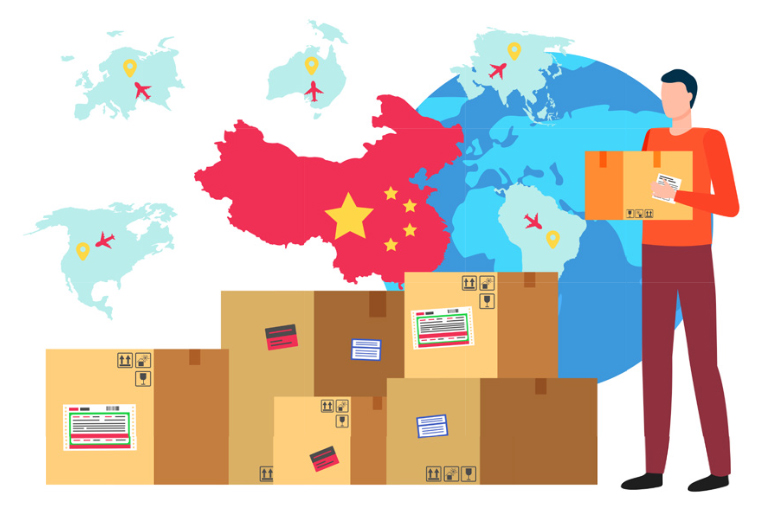
6. Set up a plan with your new manufacturer
7. When to tell the current supplier?
- A small minority of buyers set rules and follow them. They might say, for example, “We have a backup supplier. We give you 6 months to build an effective quality system, and we will not accept any price increase. We can help you with guidance and engineering if you need. Anyway, after 6 months, if we see no marked improvements, we will cut the order quantity by 20 % each month.”
- Most buyers are not in a position to challenge their supplier this way. They make it clear that they are not satisfied, but they don’t say anything that can be understood as a threat, for fear of being threatened in turn. Then, they cut ties when they feel the timing is right.
- A detailed bill of materials
Would your supplier expect to be notified long in advance?
Transition periods are often stressful. However, most importers who have prepared it well think to themselves ‘I wish I had done it sooner’.

Chinese supplier switching checklist
As we have already explored, not every Chinese factory does a great job, and there are numerous reasons why you may choose to switch to a new supplier, such as your current supplier being in financial trouble or taking too many liberties with your IP.
The problem is, some transfers between suppliers are quite complex. There is the supplier management aspect, and there are all the technical details to get right. In this section, we share a 7-part checklist including 40+ points that will help you think of those technical details based on our decades of experience in production in China and dealing with Chinese suppliers.
1. Initial planning
- Can the product design remain exactly the same?
- If the design has to evolve, what are the consequences?
- Will new component suppliers need to be found and qualified?
- Will new certifications be needed?
- What about a new set of performance tests and reliability tests?
- What business terms have to be agreed as early as possible with the new manufacturer? (Since the longer you wait, the harder it will be to negotiate good terms.)
- Have you signed a manufacturing agreement with the new manufacturer?
- If you don’t have your own template, maybe they have theirs and they can submit it for your review? This is an important document, and a lawyer who will review it can help you a lot. Don’t try to make it too one-sided.

2. Gathering information (from the current manufacturer)
- Do you have all the engineering design files that will be needed to fabricate the custom components?
- In many cases, the supplier sends files that, alone, are basically useless. For example, for the electronics, they export the PCB layout in pdf, so they can say “here is the board information”, but they don’t send the schematics and the list of components.
- Another common reason for this is, your supplier may have outsourced both the development and the production of certain parts or subassemblies. In that case, your supplier may also be unable to get the engineering design files.
- Do you have the bill of materials with details (for each component, who the supplier is, what the price, lead time, and MOQ are, and so on)?
- This is similar to the previous point. Typically, it is considered highly proprietary. And it would allow you to estimate how much margin the assembly supplier is making.

- Can the new supplier learn about the current manufacturing process?
- Maybe you mention that a factory audit is required by a potential new customer, and you send one of the new supplier’s engineers as “technical expert” to assist the auditor?
- deally, you also shoot videos about all the special/complex operations. That will be quite useful.
- What information do you have about the tooling to transfer?
- Do you have a list of assets (tools, fixtures, gauges, special testing stations…) currently used for the manufacturing of your product?
- Where are they? Some may be in sub-suppliers’ facilities, and retrieving them might be quite a challenge.
- Do you have a list of assets (tools, fixtures, gauges, special testing stations…) currently used for the manufacturing of your product?
- What is their remaining lifetime (based on the number of shots already done, on the way they have been maintained…)?
3. Gathering information (from your side)
- Will assembly lines and other equipment need to be dedicated to your productions? For example, you may have strict requirements when it comes to IP protection, and you are willing to pay a bit more and have an area “reserved” to your products.
- Take the opportunity to pause and reflect, and to analyze the past issues you have experienced. Should you express specific needs? For example, if your electronic products need to be ‘burn-in tested’, the new factory will need to have the right testing equipment. And, if that requirement is too specific, you will probably have to pay for it.
- Can the new supplier get examples of “good” and “not good” samples, as well as a list of the most common past issues on that product, from the start?
- What is very important for you? If, for example, you are afraid the factory’s measurement system is not great, you might have to require gauge repeatability & reproducibility studies.
4. What is the gap (what is missing)?
- Does some sourcing work need to get done?
- In particular, for custom components, what needs to be done and how long will it take?
- Based on past issues, should some component suppliers be replaced? What about their proximity to the current manufacturer, should this be considered?
- What is the gap, when it comes to staff competence?
- How many production operators will need to be trained?
- Should specific profiles of engineers or technicians be hired from outside?
- Will they need a lot of help and information from your side?
- What amount of process engineering work is needed, to make production possible?
- Will you require a process control plan, and assembly & testing work instructions?
5. Preparing for the move
- Were some long-lead-time parts purchased by the current supplier? It might be necessary for the new supplier to purchase them, and payment after inspection might be a good idea.
- Ask the new manufacturer for timelines.
- When will they be ready to manufacture?
- When can the testing stations be operational?
- How long will it take them to ship the first order, realistically?
6. Ensuring good preparation before production starts
- How will the new manufacturer validate the tooling they will receive from the previous manufacturer?
- How will the components be checked (incoming QC)?
- When will checklists and approved samples be ready, at least for critical parts?
- Are special testing stations (e.g. for functional testing of PCBAs) needed?
- Will new contracts be set with the suppliers, to deal with the case where defective parts are received and sent back?
- How will they validate that everything is ready? With a pilot run, on how many pieces?
- What if serious issues are detected at that time, will other pilot runs be performed?
- Should compliance and/or reliability testing be planned on the pieces coming out of the pilot run?
7. Setting the bases for good management of the new manufacturer
- What performance indicators will you gather? Based on what data sources?
- How often will you give feedback to them?
- Have you promised certain order quantities in the future? Follow up on that.
- Are you planning to develop your product’s next version, or your next product, with them? Be clear about your timing, and about the reasons behind your future decision.

How to safely transfer tooling between old and new supplier
Many importers have tooling in China for creating their molded, cast, or extruded parts. The problem is what happens to this tooling once you have decided to switch suppliers, as it’s usually held and used by your current supplier.
So, when making the decision to move to a new supplier (assuming your old supplier has agreed to release it) the tooling transfer is a challenge in itself, as without it your new supplier can’t start work (the only other option is to make new tooling at great expense).
So this section deals with a sensible transfer process to follow to transfer a set of tooling securely.
1. Arrange a legally watertight contract in advance
2. Record information about the mold
3. Build inventory to cover yourself while the transfer happens
4. Announce the transfer to the current supplier
5. Agree on the last financial exchange
It might be smart to agree on a small payment rather than playing hardball at this point.
6. Arrange mold pickup & transfer
1. You
2. You
3. Old Supplier
4. You/Your 3rd party inspector
5. You/Old Supplier
6. You/Old Supplier
7. You
8. You/New Supplier
9. You/Your 3rd party inspector
10. New Supplier/You/Your 3rd party inspector
11. You/Your 3rd party inspector
12. You/New Supplier
13. You/Your 3rd party inspector
14. You/Your 3rd party inspector
Important:- If the new supplier arranges the mold pick up, make sure they are doing so anonymously. You don’t want your current supplier to change their mind and not release the tooling at the last minute when they see that you are using a competitor! It is often advisable to arrange transportation through your freight forwarder, to avoid any contact between the 2 suppliers.

7. Be aware of a new supplier’s fees
8. Control the first samples
Why go through this complex tooling transfer process when switching to a new supplier?
Retaining control of your tooling is important for two reasons:
- To lose your mold to your old supplier when starting production with a new factory is incredibly risky as they could start making and selling your products even after your relationship has ended (and may willing do so if they know you went to a competitor).
- You need to avoid the high costs of making brand new tooling and molds if you’re not able to transfer the existing ones to your new supplier.

Bonus
How and why to develop a backup supplier
Sourcing a backup supplier
See your backup supplier as a form of insurance.
During the sourcing process you will no doubt find more than one possible supplier for your products.
 During the sourcing process you will no doubt find more than one possible supplier for your products.
Some importers choose to give their ‘best fit’ supplier the bulk of their orders, but they’ll also choose to work with a second supplier who also ticked many of the boxes, giving them smaller orders over time.
For instance, should your primary supplier be shut down as happened with many factories in and around Hubei province in China in early 2020 due to the coronavirus epidemic, perhaps your secondary supplier is able to pick up some of the slack and, of course, they’re already experienced in producing your products so you’re not sourcing a supplier from scratch.
There may be numerous reasons why this ‘backup’ didn’t win your major business, but by keeping them on side by giving them some orders, you have protection against disruption of supply in case your primary supplier has issues
The same goes for if a primary supplier begins to exhibit undesirable behaviors, such as delivering late, increasing prices unexpectedly, etc. Your backup gives you an option for switching and this protection is enhanced even further if the backup supplier is in a different area or even country to your major supplier. So, considering China, an effective backup may be situated in, say, Vietnam or Taiwan.
If you do end up switching to your backup from a former supplier, it may be that you are able to go to them and dangle the carrot of the promise of larger orders if they are able to provide certain benefits. This may be more competitive pricing, signing a new agreement which favours you more than your former one, or, perhaps, a promise to improve their processes or equipment to suit your needs which would, long-term, benefit both parties.

Bonus
Get help to decide if you even need to consider switching
Having read this eBook you’re no doubt aware that making the decision to switch to a new supplier in China can be a daunting decision.
Thinking About Switching Manufacturers?
Moving production to a new factory requires careful planning to avoid quality problems, delays, and supply disruptions.
Agilian helps companies transfer existing products to a new manufacturing partner, with engineering, quality, and production support to manage the transition.


Agilian (Dongguan Agilian Technologies Co., Ltd.) is certified to ISO 9001:2015 (FM 763143) and ISO 14001:2015 (EMS 774980).
Quick Links
Contact
Agilian Technology Co. Ltd.
Unit 203, 2nd Floor, Haorong Zhichuang Science & Technology Building,
No. 47 East 1st Street, Xingfa South Road,
Wusha Community, Chang'an Town,
Dongguan, Guangdong, China 523859
Phone (CN): +86 133 4263 0352
Email: inquiries@agiliantech.com
Opening hours (China time):
Mon–Fri: 08:30–18:00
Sat: 08:30–13:00
Sun: Closed
We respond to all inquiries within 24 hours.

