7 Tips for Faster Hardware Product Development While Managing Risk
THE AGILIAN WAY : Blog
>
A practical guide for hardware teams moving from product design to mass production
Hardware product development and launching your new product quickly is difficult.
There are many things to get right: the product architecture, mechanical design, electronics, firmware, components, tooling, reliability, compliance, manufacturing processes, quality controls, packaging, and supply chain.
One approach is to do everything sequentially and refuse to move forward until every question has been answered. That keeps certain risks low, but the project may take a very long time.
The opposite approach is to rush ahead, skip validation activities, and hope to solve problems later. That may look fast for a few months, but it can lead to expensive redesigns, tooling modifications, component scrap, production delays, and field failures.
There is a better approach.
Move quickly where you can, maintain discipline where you need it, and consciously decide which risks are acceptable.
At Agilian, this is how we approach projects where speed to market really matters. For some well-funded hardware companies, the lowest development cost is simply not the priority. If putting more engineers on a problem, starting tooling earlier, making additional prototypes, or paying more for an accelerated task can save several weeks, the trade-off may make very good commercial sense.
Going faster usually means spending more in selected areas, running more activities in parallel, making decisions faster, and accepting some additional risk. The important point is to know where the extra money and risk are buying meaningful time, and where they are not.
These projects also require a different type of manufacturing partner. A lengthy RFQ process or a large contract manufacturer with slow internal decision-making may not suit a company whose main constraint is time. The right partner needs enough engineering and manufacturing capability to support the project, but also the flexibility to move quickly when decisions need to be made.
Here are seven hardware product development principles we regularly recommend.
This sounds contradictory, but one of the best ways to launch faster is to avoid rushing immediately into detailed design.
Spend some time at the beginning thinking carefully about the architecture of the product and the technologies you intend to use.
Which functions are genuinely essential for V1.0?
Which technologies are already well understood, and which ones introduce uncertainty?
Which components will drive the rest of the architecture?
Could a standard module or component replace something you are planning to develop yourself?
Are you effectively developing two products when you only need one?
A seemingly small product decision can create months of additional engineering work. Adding another wireless technology, custom mechanism, unusual material, battery configuration, or custom charging solution does more than add one feature. It can affect electronics, mechanical design, firmware, sourcing, testing, certification, tooling, and assembly.
This is why our first new product introduction (NPI) phase at Agilian focuses on feasibility, design architecture, key components, major assumptions, and the biggest technical risks before the team gets too deeply committed to one solution.
For a V1.0 product, simplicity is usually your friend.
You can always add features once you have real products in customers’ hands.
Ask yourself
What are the three or four biggest technical risks?
Which parts of the architecture are difficult to change later?
Are we introducing technology simply because it is attractive rather than necessary?
Can an existing, proven solution achieve 80–90% of what we need?
Which components need to be selected before the rest of the design can progress?
For electronic products in particular, component selection should also consider availability, lifecycle, reliability, compliance, second sources, and lead times, not simply whether a component works in a prototype.
2. Plan Development and Industrialization as One Project
Plan product development and industrialization, the work required to turn the design into a repeatable, production-ready manufacturing system, as one project.
A common mistake is to think:
First we develop the product. Then we figure out how to manufacture it.
That separation can cost a lot of time.
You need a project plan that extends all the way from the current design stage to mass production.
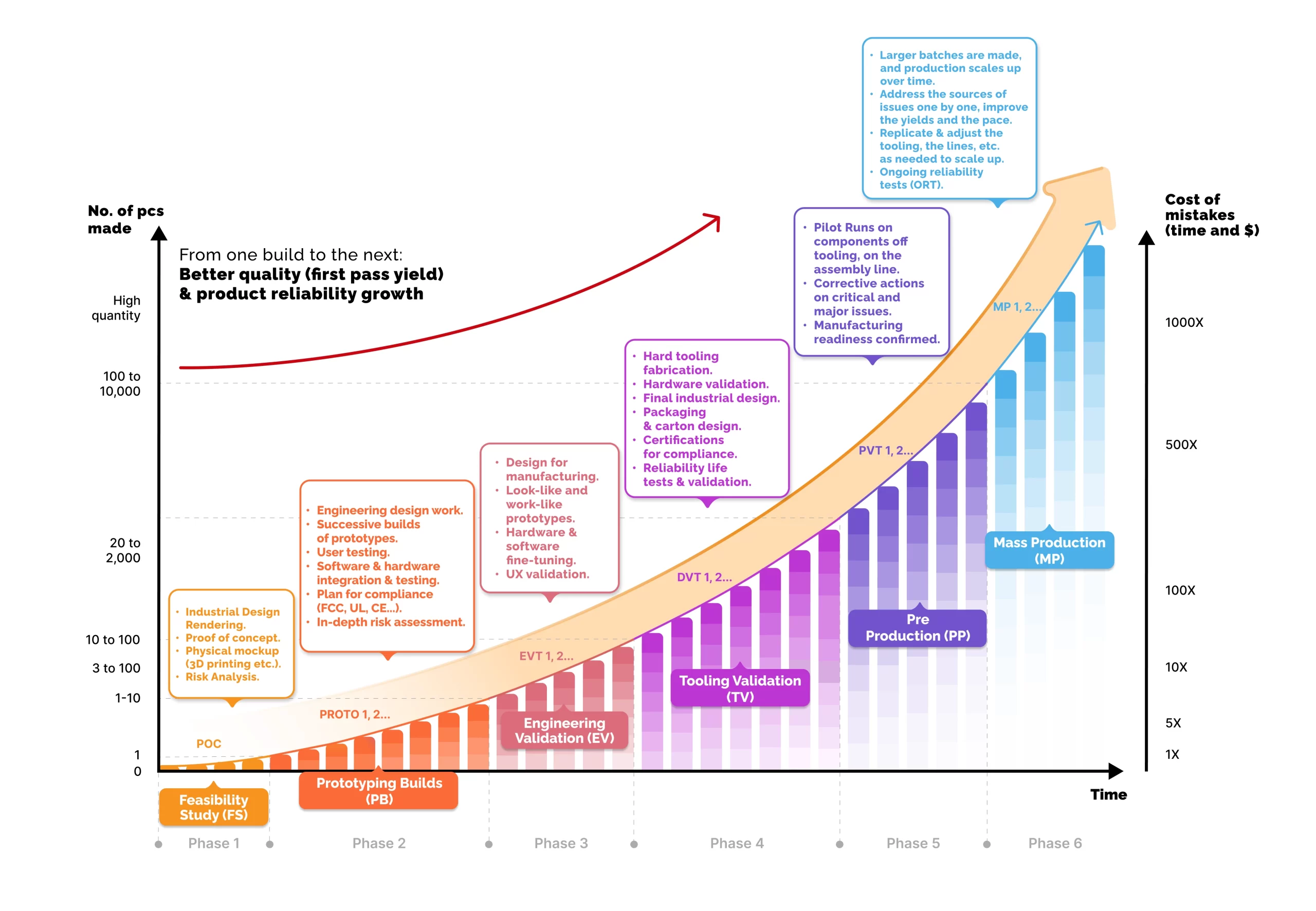
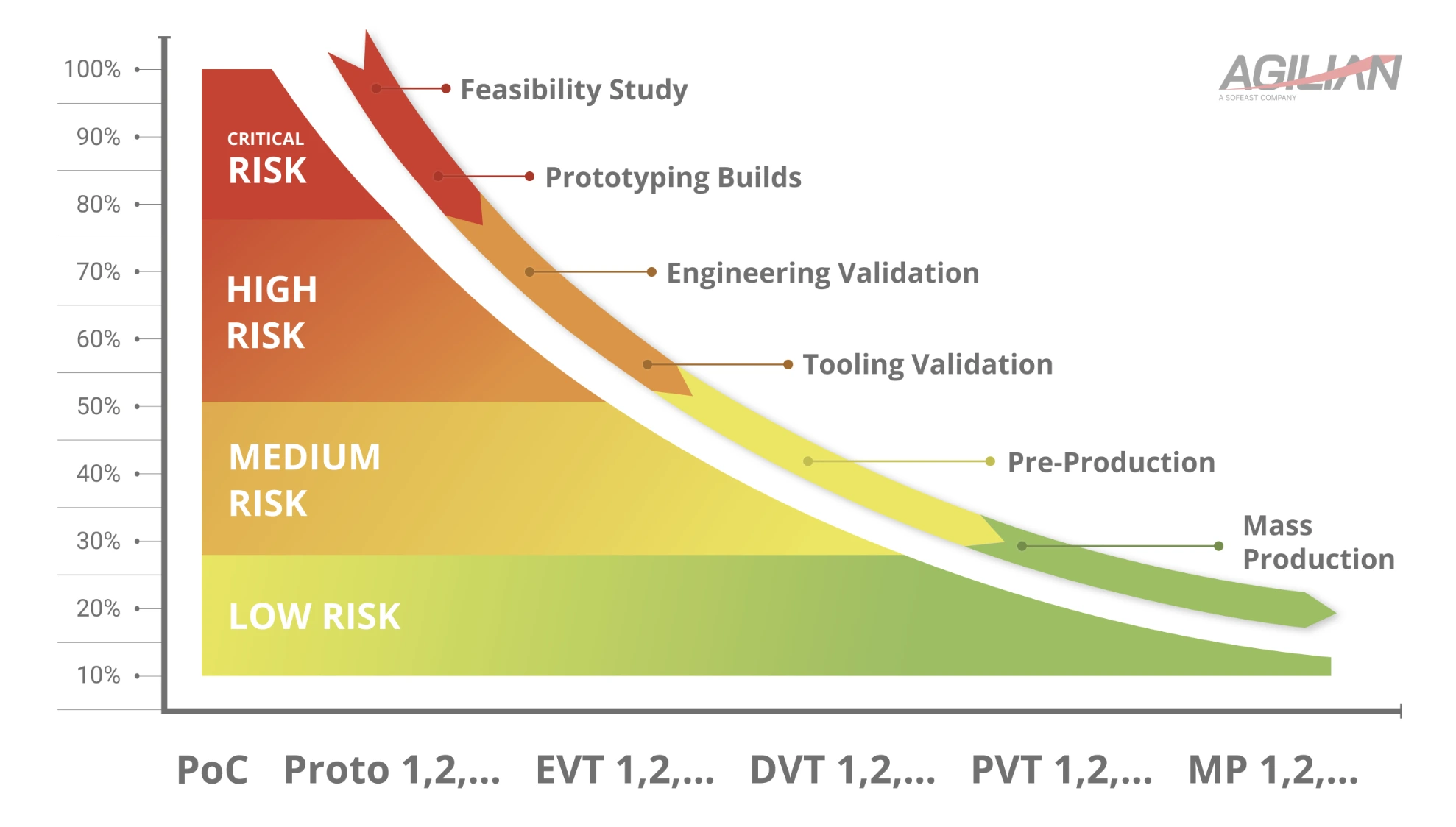
(Above: Our 6-phase NPI process takes a product from feasibility and prototypes through validation, pre-production, and mass production. Planning the full path early makes it much easier to identify dependencies and opportunities to save time. Click the graph to enlarge it.)
That means thinking about:
Engineering iterations
Prototype builds
Component sourcing
DFM
Reliability testing
Compliance
Tooling
Production fixtures
Test stations
Packaging
Quality controls
Pilot runs
Component purchasing
Production ramp-up
The purpose is not to create a beautiful Gantt chart that becomes obsolete two weeks later.
The purpose is to understand dependencies.
What absolutely needs to finish before something else can start?
And, just as importantly: What doesn’t?
This is where substantial amounts of time can be saved.
Agilian’s NPI process moves through feasibility, prototyping, engineering validation, tooling validation, pre-production, and mass production, but activities inside those phases deliberately overlap. During tooling validation, for example, product testing can continue while assembly, packing, inspection, and production-testing systems are being prepared in parallel.
A good launch plan should therefore show more than milestones. It should show what can safely happen at the same time.
A compressed hardware product development schedule usually requires more resources.
If several activities can progress independently, there is no reason for all of them to wait in the same queue. While one team is refining the product, others may be working on sourcing, compliance, reliability planning, packaging, manufacturing processes, fixtures, test systems, and quality standards.
(Many NPI activities can progress at the same time when the right resources are available. Coordinating independent workstreams helps reduce waiting time without necessarily increasing technical risk.)
This is one of the safest ways to shorten a project schedule: add enough capable people and coordinate their work so that independent activities can progress at the same time. But do bear in mind that parallel work is safest when the interfaces and assumptions between workstreams are clear. Otherwise, one design change can invalidate work being carried out simultaneously in several other areas.
A five-person team cannot usually do the work of a fifteen-person team simply by scheduling more meetings.
If your internal team does not have the capacity or a particular technical skill, bring in external help where it makes sense. The extra development cost may be relatively small compared with the commercial impact of losing several months of market opportunity.
This is one reason we put mechanical, electronic, firmware, sourcing, quality, process engineering, prototyping, testing, and manufacturing resources close together at Agilian. Faster communication and shorter feedback loops allow several lower risk workstreams to progress simultaneously rather than waiting in a queue.
There is an important management implication here:
Someone needs to see the entire project.
If every engineer or supplier concentrates only on their own deliverable, nobody is managing the critical path or the combined risk created by decisions being made across different workstreams.
4. Start Design for Manufacturability (DFM) Early, With People Who Understand the Manufacturing Processes
Do not wait until the design is frozen to ask, “Can we actually manufacture this efficiently?”
By then, some of the most expensive design decisions may already have been made.
DFM should progressively influence the design while it is still evolving.
That may involve questions such as:
Can this plastic part be molded reliably?
Are draft angles, wall thicknesses, ribs, bosses, and tolerances appropriate?
Are unnecessarily tight tolerances driving up cost?
Is the assembly sequence practical?
Can an operator assemble something incorrectly?
Can screws, connectors, cables, or components be standardized?
Can the product be tested efficiently during production?
Are cosmetic expectations compatible with the selected process?
This is also why the manufacturing partner should usually become involved before the design is totally finished.
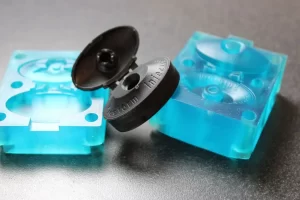
(Production-intent prototypes and early tooling work, such as using a 3D-printed mold like above to produce parts in production-intent materials, can help uncover manufacturability issues while design changes are still relatively quick and inexpensive to make.)
A good manufacturer brings knowledge that a product design consultancy may not have: tooling behavior, process capability, assembly constraints, production testing, supplier realities, yields, quality issues, and what happens when you try to make hundreds or thousands of units rather than five prototypes.
Agilian conducts a formal DFM review around engineering validation, but manufacturability, quality, and reliability considerations start influencing prototypes before that formal gate.
The review brings the relevant product and manufacturing disciplines together to identify manufacturability risks, required design changes, and production-process implications before major tooling and production commitments are made.
You don’t want a manufacturer redesigning your product for you at the last minute.
You want manufacturing knowledge feeding into your decisions while changing the design is still relatively cheap and quick.
5. Don’t Try to Manage Everything From 8,000 Miles Away
We see this frequently.
A company has engineers in Europe or North America. The manufacturing partner and most component suppliers are in China. Samples travel back and forth by courier. Engineers send comments. Somebody interprets those comments. Another sample gets made.
A relatively simple iteration can consume two weeks.
Then it happens again.
Being at the factory changes that enormously.
An engineer can look at a prototype in the morning, discuss a change directly with the people making it, review another iteration, visit a component supplier, test something, and make another decision the same day.
It also keeps the project highly visible inside the factory.
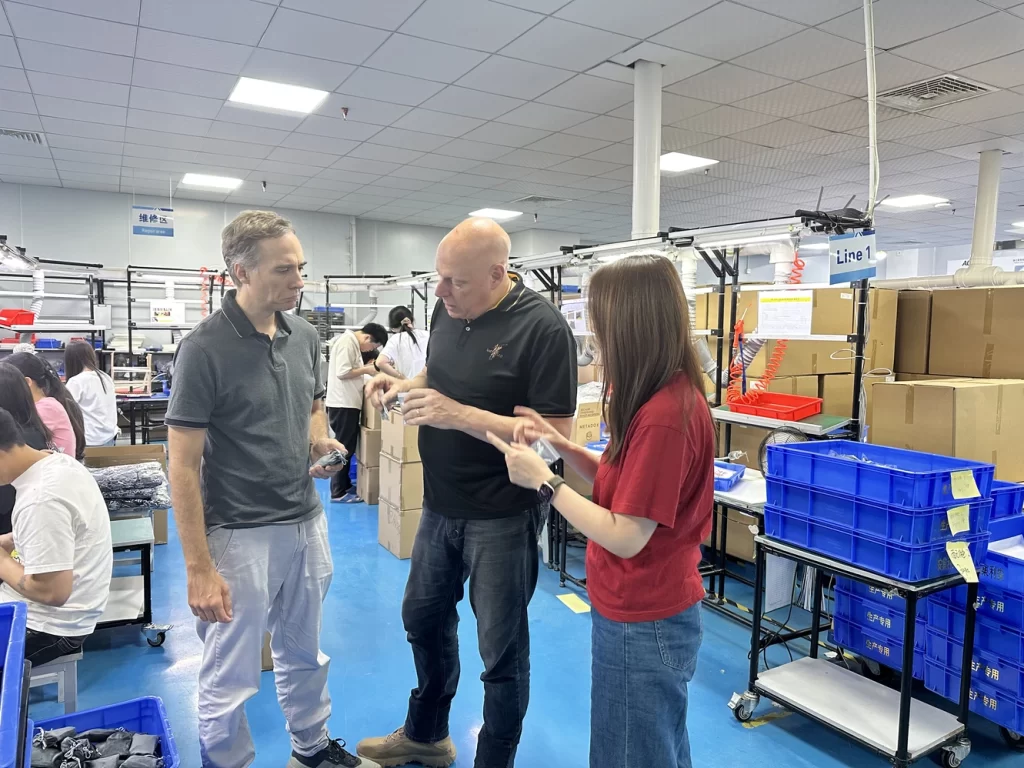
Agilian actively encourages customers to work onsite with our teams during important development and industrialization stages. Customers get direct access to engineering, prototyping, test equipment, quality, production, and supplier resources, making it much easier to shorten iteration loops.
You don’t necessarily need someone permanently living next to the factory.
But for a highly compressed launch schedule, several well-timed visits can save weeks.
Good times to be onsite include:
Intensive prototype iterations
Important engineering validation builds
Reviewing parts coming off new tooling
Appearance and surface-finish approval
Production fixture and test-station development
Pilot runs
Start of mass production
At the same time, keep some prototyping capability close to your own engineering team.
Simple 3D prints, electronics breadboards, test rigs, mock-ups, and modified samples can answer questions quickly without everything having to travel across the world.
The objective is to make your learning cycles as short as possible.
6. Take Calculated Risks to Go Faster, But Understand the Downside
Once you have shortened the schedule through better planning, enough resources, parallel workstreams, and faster decisions, going even faster may require accepting additional risk.
Risk means both the probability of something going wrong and the consequences if it does. On an accelerated NPI project, those consequences may include losing time, losing money, or both.
The objective is not to take as much risk as possible. At some point, taking additional risk increases the chance of tooling rework, scrapped components, repeated testing, additional pilot runs, and a project that ultimately takes longer and costs more.
The question is therefore not simply, “Could this save us time?” It is, “Is the potential time saving worth the probability and consequences of something going wrong?”
Use an FMEA to Identify and Prioritize the Risks
A Failure Modes and Effects Analysis (FMEA) is a structured way to identify and assess risks. The team considers what might go wrong, the potential “failure modes,” and evaluates the severity of the impact, how likely the failure is to occur, and how likely it is to escape the controls in place.
For the product itself, a design FMEA (dFMEA) should be carried out early, while the design can still be changed relatively easily. As the project moves toward manufacturing, a process FMEA (pFMEA) can be conducted with the manufacturing team to examine what could go wrong in the production and assembly processes.
The objective is not necessarily to eliminate every possible risk. An FMEA helps the team identify the highest risks, decide what preventive actions or controls are needed, and concentrate resources where they will have the greatest impact.
Where Taking Additional Risk May Save Time
On a conventional NPI schedule, major activities tend to follow one another in a relatively cautious sequence.
But when the launch date really matters, some of those activities can be deliberately overlapped.
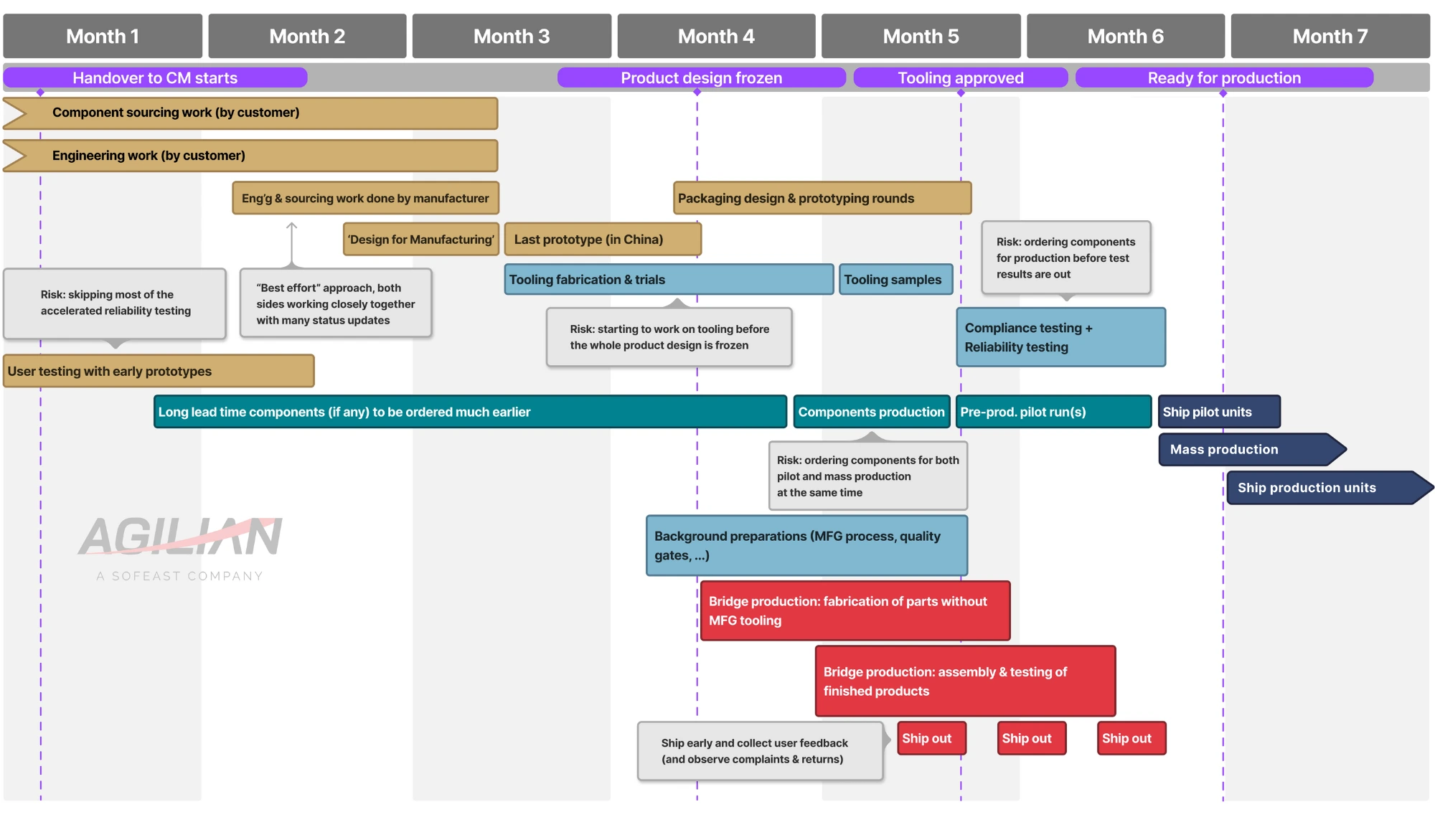
(Accelerating NPI can mean making selected commitments before the previous validation stage is fully closed. This may save significant time, but it also increases the potential cost and schedule impact if an assumption proves wrong.)
For example:
Start some tooling before the entire design is frozen
You may have ten molded parts, but only one or two are still changing.
Rather than waiting for the entire product to be frozen, you might release the stable parts for tooling first.
This can save several weeks.
The risk is that a later design change affects a tool that has already been fabricated. You need to understand how likely that is and what the modification or replacement cost would be. Make sure you also consider the schedule consequences of a tooling change or, in the worst case, having to cut new tooling later.
Buy long-lead components earlier
If you wait until the pilot runs are completely finished before placing orders for mass-production components, you may add the full component lead time, potentially several weeks or longer, to the schedule.
For stable, well-understood components, it may make sense to place those orders earlier.
The downside is inventory exposure.
If the design changes, you may be left with components you can no longer use.
Continue industrialization while testing is underway
Reliability and compliance testing can take time.
That does not necessarily mean the rest of the project needs to stop.
If the design is mature and the likely failure modes are understood, you may decide to continue developing fixtures, assembly processes, packaging, work instructions, test systems, or certain tooling while testing is still in progress.
The earlier you commit, the more uncertainty you accept
Risk should naturally decrease as the product progresses through NPI.
Early in development, design changes are still relatively common. By the time you reach pre-production and mass production, the product and manufacturing system should be much more stable.
(Risk falls as the product moves through NPI. Accelerating a project often means making financial or manufacturing commitments while more uncertainty remains.)
More risk does not always mean more speed. If too many financial or manufacturing commitments are made while uncertainty is still high, one design change can trigger tooling modifications, unusable inventory, repeated testing, rework, and additional pilot runs. Beyond a certain point, taking more risk increases the probability that the project will become both slower and more expensive.
This is why the same decision can be sensible at one stage and reckless at another.
Ordering $10,000 worth of components before a final pilot run may be reasonable if those components are highly unlikely to change.
Ordering $250,000 worth of custom material while several major design questions are still open is a very different decision.
For every accelerated decision, ask:
What can go wrong?
How likely is it?
What would it cost us in time and money if it does?
How much time are we actually saving?
Can we reduce our exposure?
Do we have a fallback plan?
A relatively small financial exposure that saves four weeks might be an excellent trade.
A major commitment that saves only a few days probably is not.
Take calculated risks, not blind risks.
The objective is not to maximize risk or remove validation, pilot runs, testing, or industrialization work. It is to understand the risks, reduce them where practical, and decide intelligently which commitments can be made earlier when the potential time saving justifies the exposure.
7. Make Sure You Are Working With the Right Type of Manufacturer
A famous manufacturer is not automatically the right manufacturer.
Neither is the cheapest one.
Is this manufacturer suitable for this product, this volume, and this stage of our business?
A large contract manufacturer may have impressive capabilities, but that does not necessarily make it a good choice for an accelerated project. If your program is relatively small compared with its largest customers, decisions may move through several layers, shared engineering resources may be difficult to access quickly, and changes that should take a day can take a week.
This matters particularly for well-funded companies that are more sensitive to time than to the lowest possible development cost. They may be prepared to spend more to accelerate engineering and industrialization, but they need a manufacturing partner that can actually respond at the same pace.
The opposite extreme is dangerous too.
A very small factory might be highly motivated and flexible, but simply lack the engineers, quality systems, sourcing network, project-management ability, testing resources, or relevant process experience needed for your product.
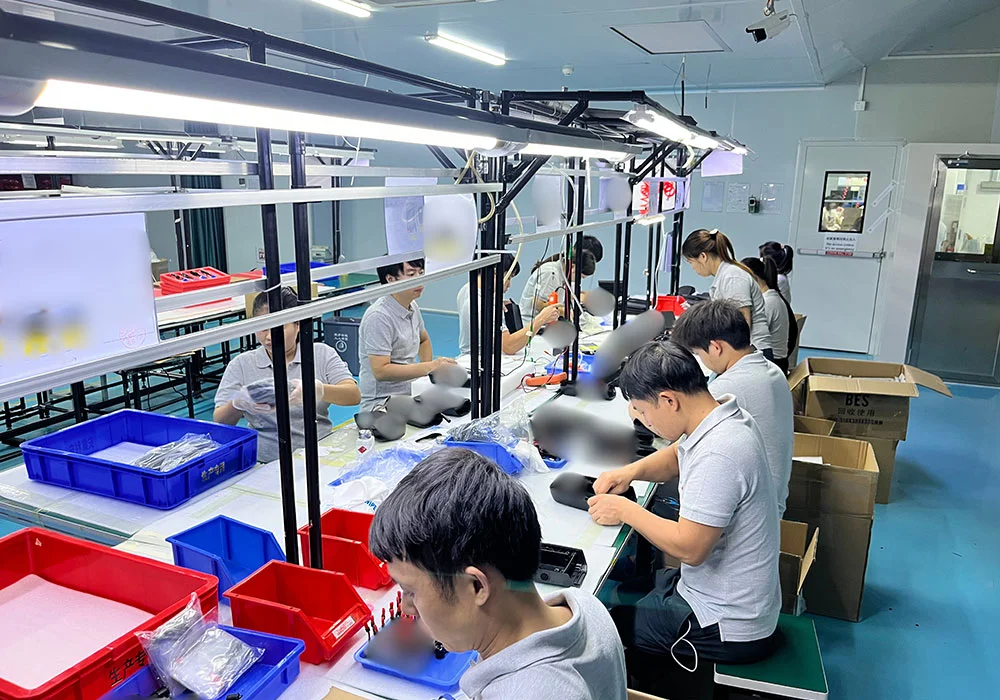
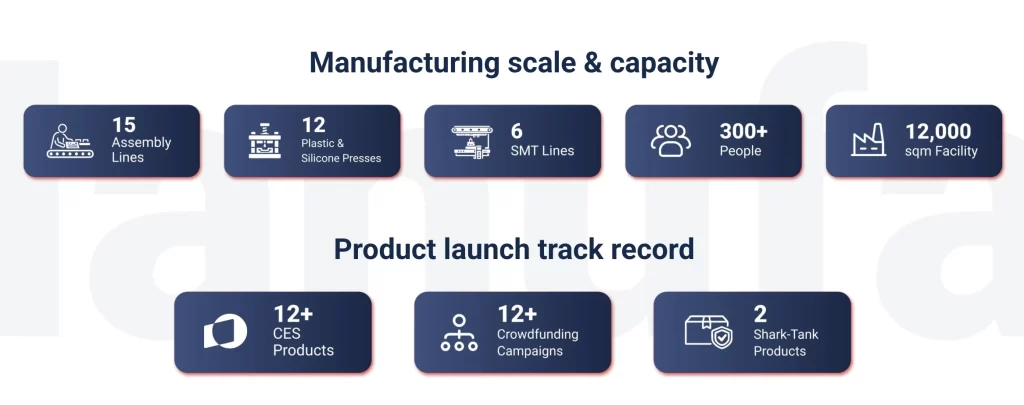
(The right manufacturing partner needs more than production capacity. Engineering support, process expertise, quality systems, responsiveness, and the ability to scale all matter when bringing a new product to market.)
Neither “large” nor “small” is automatically good.
You need a good fit.
Look at:
Experience with similar technologies
Relevant manufacturing processes
Engineering resources
Project-management capability
Quality systems
Ability to support DFM and NPI
Access to suitable component suppliers
Responsiveness
Production-volume fit
Your importance to them as a customer
Ability to scale with you
Agilian supports hardware companies moving toward scalable production. We work best with projects that have a validated product concept and are approaching engineering validation and industrialization, while earlier feasibility, engineering, and prototyping support can also be provided where appropriate.
Conclusion: Fast Does Not Mean Reckless During Hardware Product Development
Launching quickly will often require more resources, more parallel work, and a willingness to make some decisions before every uncertainty has disappeared.
It may also mean deliberately spending more to save time.
On some projects, spending significantly more on an engineering activity, an expedited tool, additional prototypes, faster testing, or extra people is perfectly rational if doing so removes several weeks from the critical path. For a well-funded company facing an important market window, the cost of delay may be much greater than the additional development expenditure.
But the objective is not simply to throw money at the project or skip the NPI process.
In our experience, the fastest hardware teams identify the major risks early, keep feedback loops short, involve manufacturing early, allocate additional resources where they will genuinely shorten the schedule, and understand exactly where they are accepting additional risk.
When speed matters, it should come from controlled acceleration, not from cutting corners.
We Help You Define the Right Plan for Your Project
There is no single “best” NPI plan for every hardware project.
Some companies are working toward a fixed market window and are prepared to invest more resources or accept additional risk to shorten the schedule. Others place greater emphasis on minimizing development cost, reducing technical risk, achieving demanding quality targets, or building a highly robust manufacturing system before launch.
The appropriate hardware product development plan depends on the objectives and constraints of the project.
Agilian brings product development, engineering, prototyping, sourcing, quality, testing, industrialization, and manufacturing resources together in Dongguan, China. This allows us to work with customers to define an NPI plan based on their priorities, product maturity, technical risks, budget, and target production schedule.
Depending on the project, that plan may involve additional engineering resources and more parallel activities to shorten the critical path. In other cases, the right decision may be to spend more time on validation, reliability testing, tooling refinement, or pilot production before making larger commitments.
The objective is not simply to develop a product as fast as possible.
It is to define an appropriate path to production based on what matters most for that particular project, and to understand the trade-offs behind the decisions being made.