
- What we do for you
- About Us
About Us
- Why Choose Us
Why Choose Us
In-house Equipment
Other Important Topics
- Resources
- Contact Us
- What we do for you
- About Us
About Us
- Why Choose Us
Why Choose Us
In-house Equipment
Other Important Topics
- Resources
- Contact Us
DfX, Industrialization & NPI Support
We help turn validated product designs into production-ready products by improving manufacturability, assembly, quality, reliability, testability and launch readiness.
⌂ >What We Do > DfX , Industrialisation & NPI Support
Turn a promising product design into a production-ready product.
Getting from a working prototype to stable mass production is rarely just a “design for manufacturing” issue. Success depends on making the right decisions across manufacturability, assembly, testing, quality, reliability, compliance, and cost.
That is why we take a broader DfX approach.
We help you review and improve your product design, define the right manufacturing and test processes, validate tooling and production readiness, and guide your project through a structured New Product Introduction (NPI) process so you can move into pilot runs and mass production with fewer surprises.
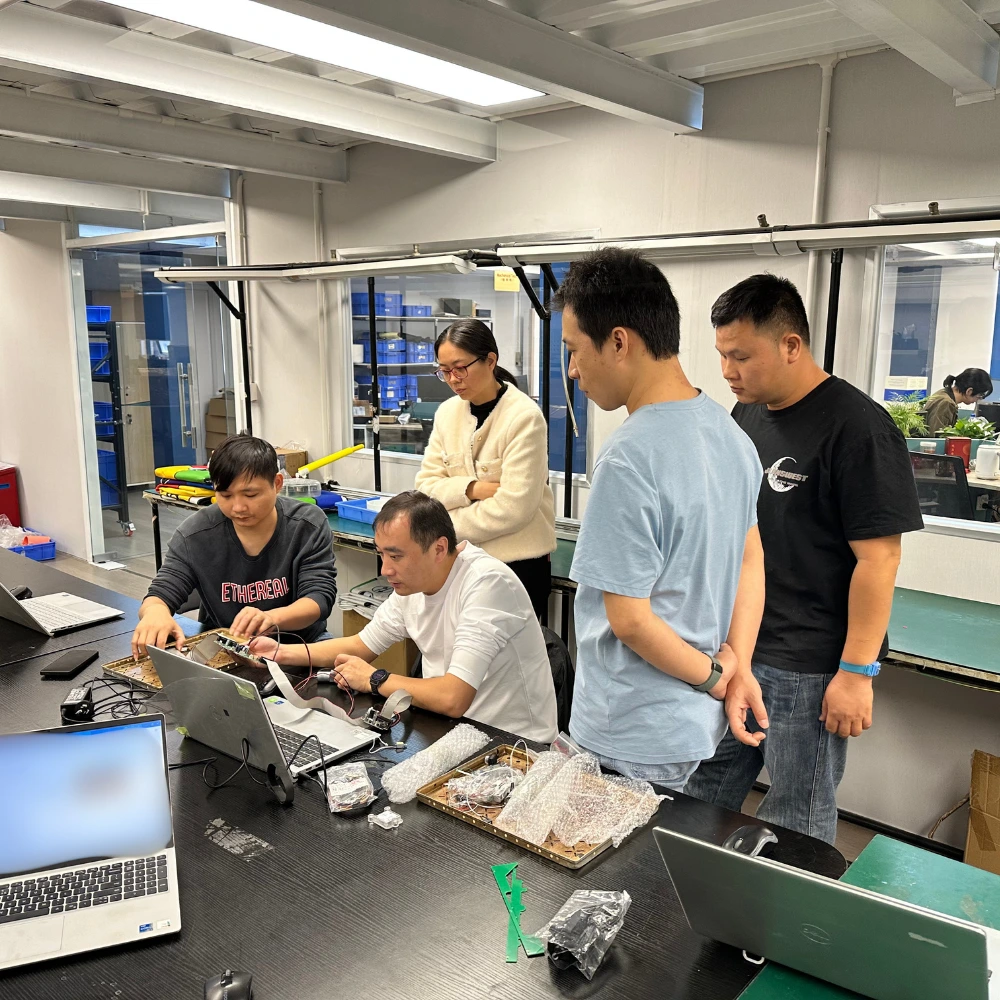
What DfX Means
Design for Manufacturing (DfM)
Design for Assembly (DfA)
Can it be assembled quickly and correctly?
Design for Quality (DfQ)
Design for Reliability (DfR)
Design for Test (DfT)
Can key product functions be tested robustly?
Design for Compliance
Design for Cost
Why a Broader DfX Approach Matters
A product can work well as a prototype and still be poorly prepared for production.
For example, your design may be difficult to manufacture repeatably, too slow or too error-prone to assemble, hard to test properly on the line, reliant on risky materials or processes, hiding reliability or compliance issues, or creating avoidable cost once scaled.
A broader DfX approach helps surface these risks before they become delays, scrap, rework, field failures, or cost overruns.
What We Do
Each project is different, so we tailor the scope to your product, maturity, budget, and commercial priorities.
DfX Review of the Product Design
We review the design from several practical angles — not only manufacturability, but also assembly, quality, reliability, testability, and cost. For electronic products, this may include component review, schematic and layout analysis, and cost/performance optimisation.
Risk Identification and Engineering Improvements
We identify issues that could lead to defects, delays, excessive costs, tooling revisions, field failures, or difficult production ramp-up, and we recommend design or process changes to reduce those risks..
Process Development and Validation
We help define the roadmap to production and build the operational foundations needed for a robust launch, including risk analyses, control plans, quality checklists and testing stations.
Tooling, Pilot Runs and Readiness for Scale
We support tooling fabrication and validation, line and equipment readiness, pilot production, ramp-up and corrective actions before and during early mass production.
Product design review, improvement & validation
We focus on making the product design better and easier to manufacture toward the end of the product design phase.
When performing a DFM review on an electronic design, our R&D team evaluates multiple manufacturing options and recommends the most suitable path based on cost, performance, and scalability, depending on the project’s objectives:
In most cases, it makes sense to pick options 1 and 2, and option 3 is applicable when you need some “design for cost optimization” work.
Note: if you need us to take care of some of the engineering work , or the industrial design , please let us know. We can probably help.
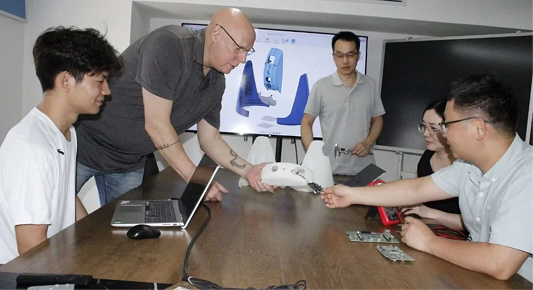
- Design reviews for part manufacturing, for assembly, for quality, for reliability…
- Safety and reliability risk assessments
- Refinement of material/component selection
- Initial tooling (before cutting metal) to validate what can realistically be achieved
- Building prototypes for testing & validation, and to evaluate ease & speed of assembly
- Accelerated reliability testing; reliability validation
- Compliance testing and management of related certifications
- Bridge production run to deliver devices to early customers and to collect their feedback
Manufacturing & process development & validation
We reduce the risks of quality defects, project delays, and unexpectedly high costs, and overall we speed up your time to market by following our structured New Product Introduction (NPI) process , and typically includes most of the following:
- Planning for a roadmap to production that makes sense for your project
- Risk analyses (pFMEA, etc.) and control plan where needed
- Development of quality checklists, testing stations, etc.
- Fabrication of tooling and it validation
- Setting up lines and equipment, and confirming readiness for manufacturing
- Pilot runs (PVT)
- Ramp up of production volumes (MP)
- Corrective actions and continuous improvement
- Ongoing reliability testing
- And other actions as appropriate
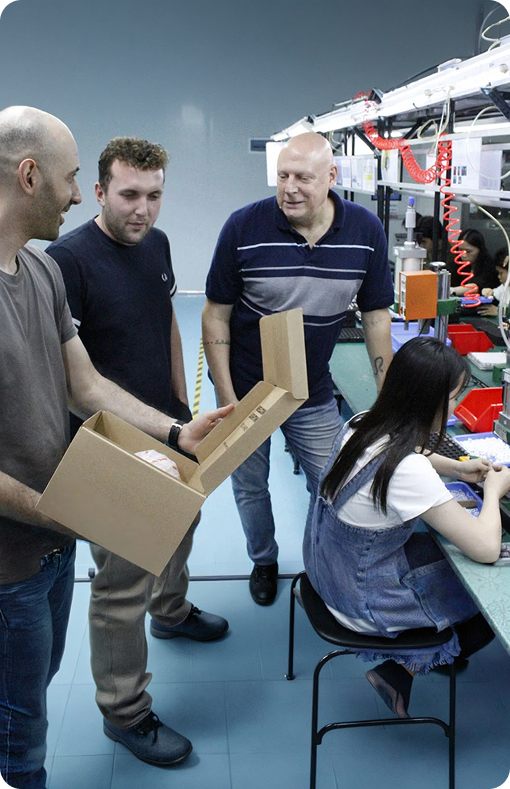
What are the benefits of working with us on ensuring your product is designed for manufacturing?
First, if your product has not been designed for manufacturing, it might simply not be possible to make it in high volume. Some people have come to us, for instance, with a plastic enclosure that can be 3D printed but not injection molded.
Second, depending on the project, a few adjustments to the product design can yield several of the following benefits:
- Catching design issues by doing a design review, thereby avoid time-consuming rework down the road
- Lower cost by using more off-the-shelf parts, by picking different materials, by making assembly much faster, etc.
- Higher capacity and higher speed by making manufacturing easier & faster.
- Better quality by removing some sources of potential issues (e.g. in machining, surface treatments, assembly, etc.)
- Better reliability by addressing a weakness, by adding redundancy, etc.
- Better safety by removing certain hazards, designing in a better safeguard, making a catastrophic failure less likely through better reliability, etc.
You tell us what your objectives are, and we will work on addressing them!
What are the benefits of working with us to industrialize your product?
When it comes to certain products, developing the manufacturing and testing processes can be very complex. Our team has experience with many materials, processes, and technologies, and has worked across many product categories. We are not afraid of challenging situations.
We follow a structured New Product Introduction (NPI) process. It is a proven process that experienced manufacturers follow carefully. The project needs to go through pre-defined validations before it goes into the next phase. For example, making sure the product design is validated before cutting steel for tooling, if at all possible. That prevents the very common situation where the project needs to go back to the previous phase for time-consuming rework.
On the other hand, our customers often request exemptions and accept the related risks. In the end, it depends on the project size and on the safety hazards that might arise. A relatively simple and harmless product that does not call for tricky manufacturing processes can be brought into production relatively quickly and effortlessly.
We have seen many factories in China skip the small production runs (pilot runs ) for new products. Unfortunately, despite all the efforts at evaluating & mitigating risks “on paper”, some issues will come up when a new product starts to be manufactured. Those issues need to be contained so bad products are not shipped to customers, and any serious issues need to be addressed before large quantities are released on the shop floor.
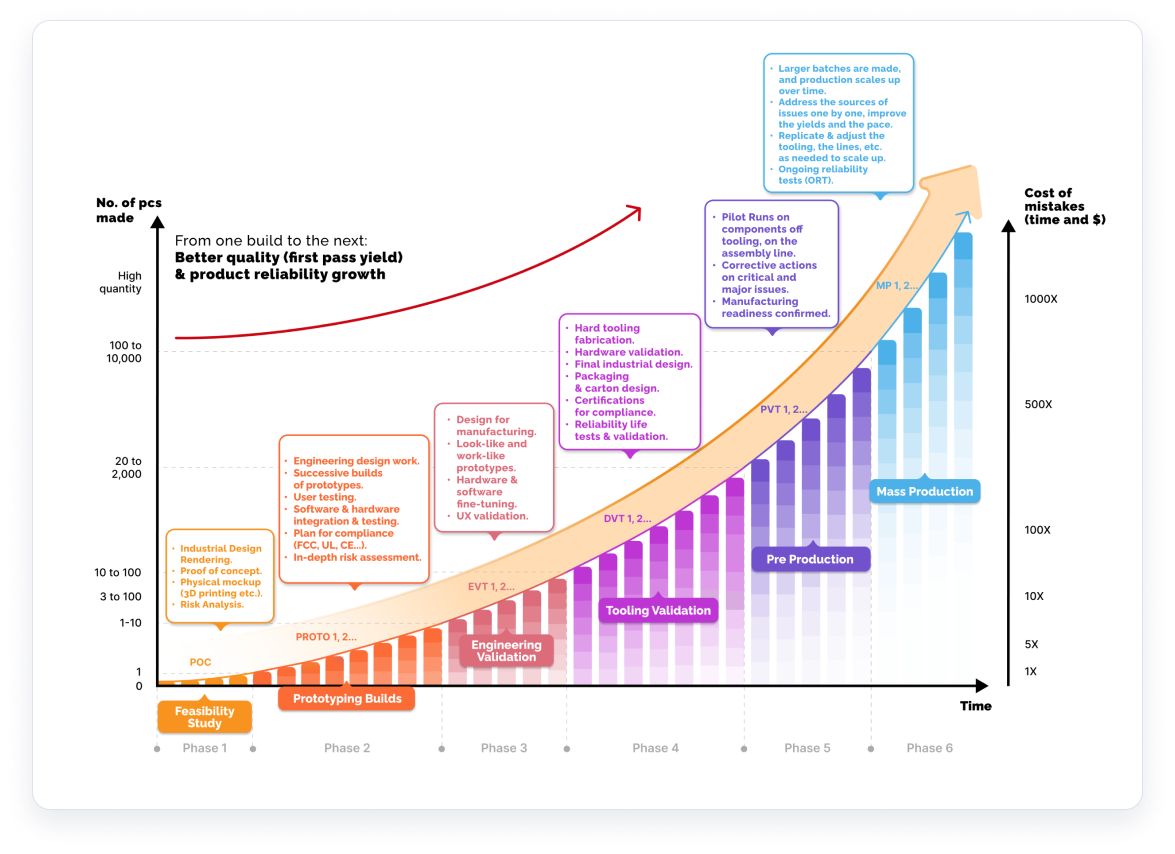
When does this work occur during the NPI process?
The tasks outlined will typically be happening between the end of phase 3 (Prototyping and EVT), phase 4 (Tooling), phase 5 (Pre-Production), and phase 6 (the first batches of mass production):
Why Work with Agilian
We combine engineering review with real production experience.
We look beyond DfM to the wider set of factors that determine launch success.
We follow a structured NPI process with clear validations before moving to the next stage.
We support the transition from design maturity to pilot runs and scale-up.
Typical Benefits of a DfX-led Approach
Fewer redesign loops late in the project
Lower risk of tooling or process surprises
Easier assembly and more robust testing
Better quality and reliability outcomes
More confidence before pilot runs and mass production
DFM, Industrialization & NPI FAQs
What is DfX?
DfX means reviewing a product design through multiple production-critical lenses — such as manufacturability, assembly, quality, reliability, testing, compliance and cost — so the product can be launched more successfully.
How is DfX different from DfM?
DfM focuses specifically on manufacturability. DfX is broader and recognises that manufacturability alone is not enough for a successful production launch.
When is this most useful?
Typically when the product concept is proven and the team needs to prepare for tooling, process validation, pilot runs and mass production.
What is DFM (Design for Manufacturing)?
Design for Manufacturing (DFM) is the process of optimizing a product design so it can be produced efficiently, reliably, and at the right cost.
What does industrialization mean in product development?
Industrialization is the phase where a product design is prepared for mass production, including process development, tooling, and validation.
What is New Product Introduction (NPI)?
NPI is a structured process that takes a product from design through validation and into mass production, including prototyping, testing, and pilot runs.
Why is a structured NPI process important?
A structured NPI process reduces risks related to quality, cost, and timelines by validating each stage before moving forward.
What happens during the industrialization phase?
Manufacturing processes are defined, tooling is developed and tested, and pilot production runs validate readiness for mass production.
Who needs DFM and NPI services?
These services are essential for companies moving from prototype to mass production, especially for complex hardware products.
Need to take your product from validated design to robust production? Speak with us about your project and we’ll help define the right next steps.


Agilian (Dongguan Agilian Technologies Co., Ltd.) is certified to ISO 9001:2015 (FM 763143) and ISO 14001:2015 (EMS 774980).
Quick Links
Contact
Agilian Technology Co. Ltd.
Unit 203, 2nd Floor, Haorong Zhichuang Science & Technology Building,
No. 47 East 1st Street, Xingfa South Road,
Wusha Community, Chang'an Town,
Dongguan, Guangdong, China 523859
Phone (CN): +86 133 4263 0352
Email: inquiries@agiliantech.com
Opening hours (China time):
Mon–Fri: 08:30–18:00
Sat: 08:30–13:00
Sun: Closed
We respond to all inquiries within 24 hours.

