
- What we do for you
- About Us
About Us
- Why Choose Us
Why Choose Us
In-house Equipment
Other Important Topics
- Resources
Resources
Blog & Social Media
- Contact Us
- What we do for you
- About Us
About Us
- Why Choose Us
Why Choose Us
In-house Equipment
Other Important Topics
- Resources
Resources
Blog & Social Media
- Contact Us
A Practical Guide to Selecting the Right Plastic Supplier
Last updated: November 24, 2026
Guidance based on our experience that can help you make the right decisions to find reliable suppliers.
Introduction
Buying plastic parts is more complicated than it seems
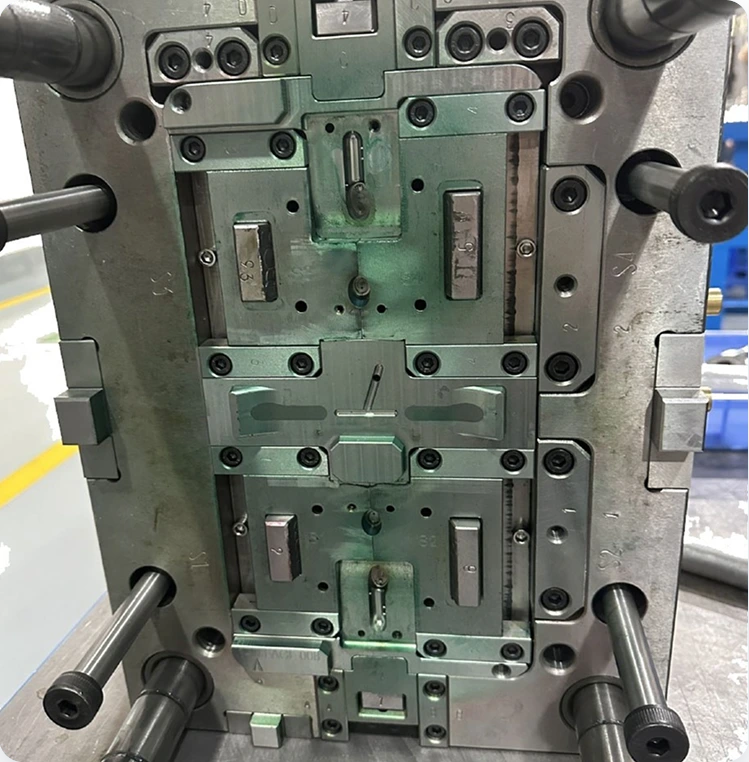
- Poor quality due to poorly designed molds, poor injection setup, insufficient material drying, excessive use of regrind material, etc.
- Molds that reach the end of their lifetime way too early, or that get damaged or “lost”.
- Molds that are taken hostage when a customer decides to move away.
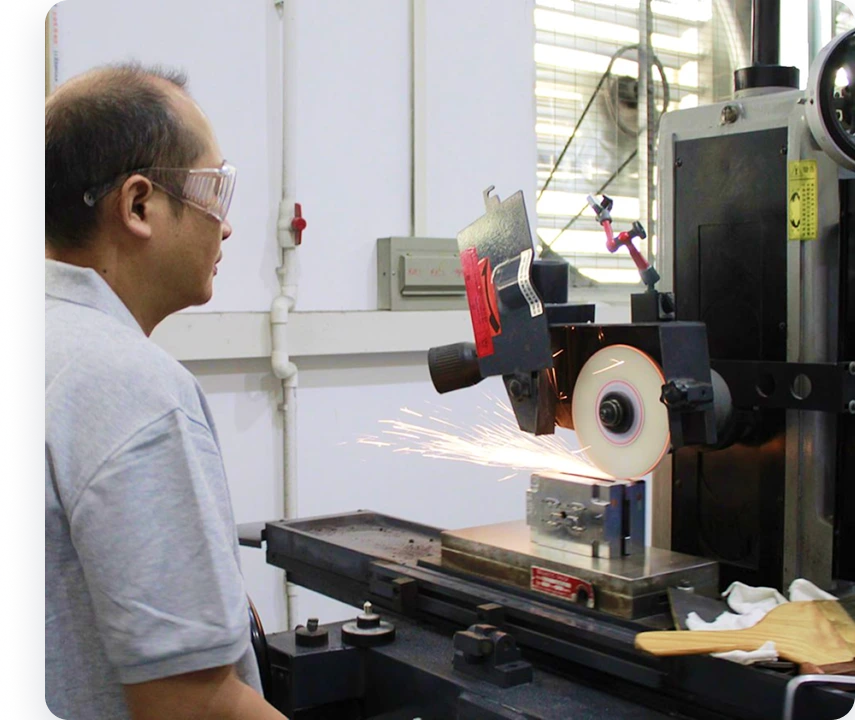
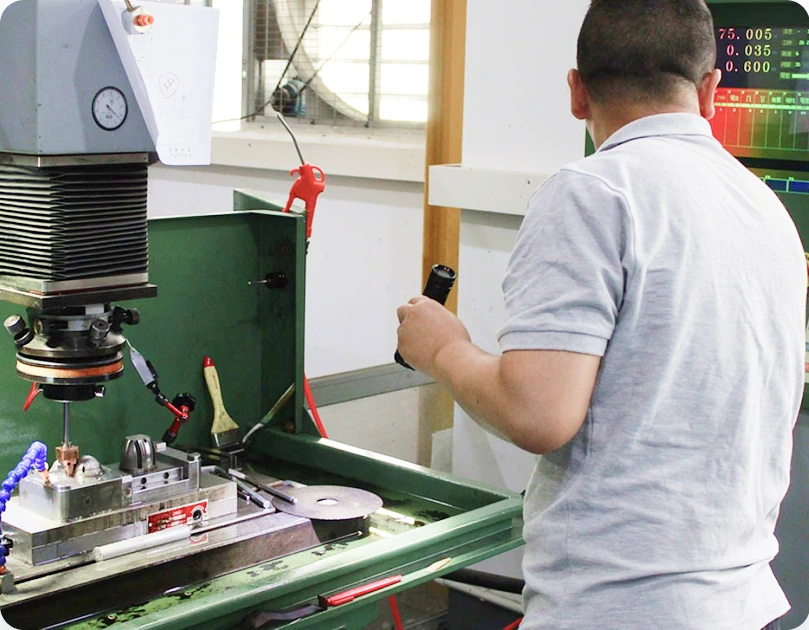
As often in China, the answer to “how to get better results from my suppliers?” is twofold:
- Be more discerning in selecting suppliers that are a good fit for your company, and
- Aside from supplier selection, follow a proper process for product design validation and production & testing process validation.
Chapter 1
Four levels of Plastic Suppliers + their Capabilities & Specialties
Why does it differ so much?
I think there are two major factors at play:
- There are different levels of plastic suppliers
- They have different approaches to getting business
Different levels of plastic suppliers
First, not all plastic suppliers are created equal. There are actually pretty striking differences between them.
Based on our experiences in that field, we can distinguish 4 levels of suppliers, as summarized below…
| What to compare | Level 1 | Level 2 | Level 3 | Level 4 |
|---|---|---|---|---|
| Tooling complexity | Simple tools, with a high risk of defects | Mostly simple tools, with some quality risk | Handles more demanding tooling | Builds more intricate, high-precision tools |
| Time to approved parts | Repeated trials and rework; may stop before approval | Over two trials in roughly half of cases | One trial is enough in half of cases | One trial is enough in half of cases |
| Polymer sourcing transparency | No disclosure | No disclosure | Discloses the exact polymer reference | Discloses the exact polymer reference |
| Polymer expertise | Little material expertise | Familiar with widely used polymers | Practical experience and datasheet review | Practical experience and datasheet review |
| Tooling price | Lowest of the four | 10–30% above Level 1 | 20–40% above Level 2 | 10–50% above Level 3 |
| Machine setup records | No records; setup retried each batch | No records; setup retried each batch | Settings recorded consistently | Settings recorded consistently |
| Quality management | No formal system | Early-stage system | Often well-established ISO 9001 and ISO 13485 systems | Often adds a well-established IATF 16949 system |
| Workshop conditions | Basic, poorly maintained workshop | Some workshop organization | Orderly, clean facility | Tightly controlled facility |
| Minor production issues | Affect most batches | About 5–20% of batches | Under 10% of batches | Under 5% of batches |
| Major production issues | Over 20% of batches | 3–10% of batches | Uncommon; identified in initial shots and contained | Less frequent than Level 3; detected almost immediately |
| Buyer oversight | Substantial | Fairly substantial | Limited | Limited |
| Automation | Minimal | Fairly limited | Automated feeding and unloading | Highest automation for large runs |
| Part price | Inexpensive | Inexpensive | 0–5% above Level 2 | 10–20% above Level 3 |
| Best suited to | Basic parts with modest specifications | Parts with less demanding cosmetic or dimensional specs | Engineered parts or tighter specifications | Parts that need high reliability and quality |
Now, let’s look at these levels one by one
Level 1
Plastic injection molding suppliers
- There are different levels of plastic suppliers
-
Do little to no DFM review before fabricating tooling, which means a lot of issues are discovered later, typically in the first trials.
Use soft steel unless otherwise specified (which means inexperienced customers are happy with the price until they realize they will need to pay for a new mold soon). -
Often outsource most (or all) of the mold machining, which means there is less control of timelines, not to mention quality.
Can only communicate in Chinese and work for local companies. - Give up relatively quickly in case the parts coming from their trials are rejected several times by the customer. There is no reimbursement.
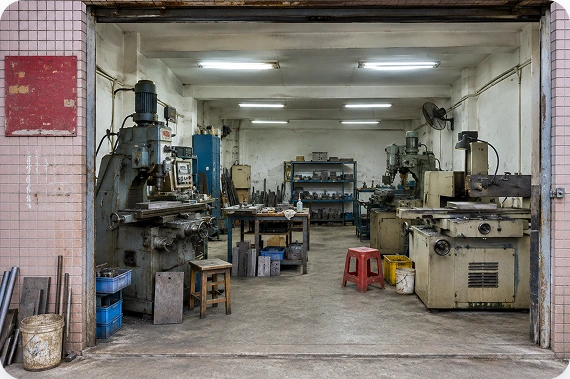
To give you some idea of the scale and setup of these level 1 fabrication shops, look at a few local shops in Dongguan (a very prominent machining and tooling location in South China) that specialize in selling blocks of steel, doing CNC milling, doing EDM machining, etc. These small machining shops are often family-run businesses situated in residential areas, sometimes with apartments directly above(!):
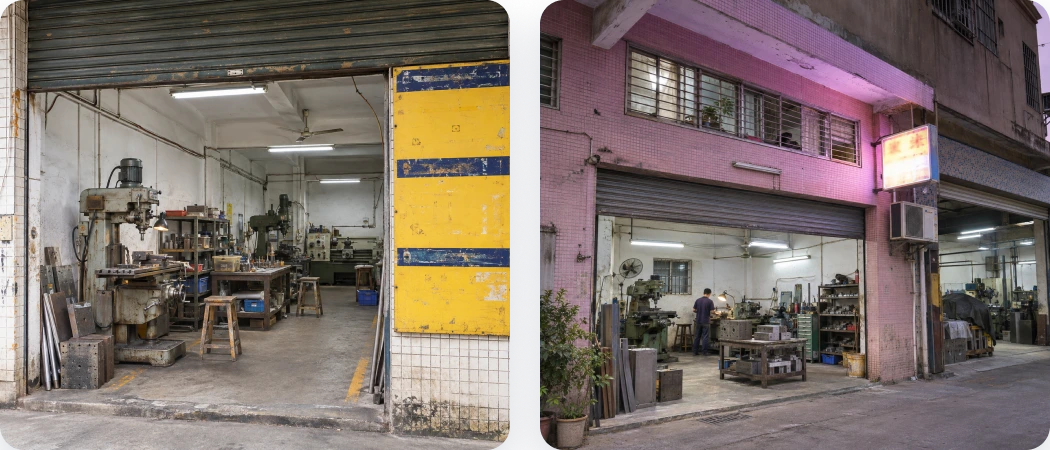
In short, most overseas buyers want to avoid those plastic suppliers. The problem is, that their direct suppliers (which assemble the product) are usually not transparent about who makes the molds and the plastic parts, and are often under strong pricing pressure, which means you may have a few ‘level 1’ shops in your supply chain…
Level 2
Plastic injection molding suppliers
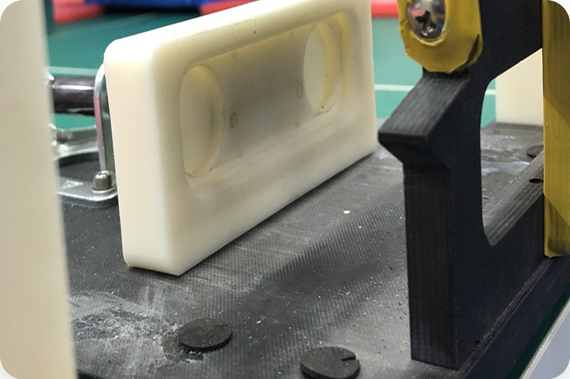
These kind of suppliers broadly:
Sometimes outsource mold design and key machining processes
- Lack specialized technicians for critical processes, for example they might do EDM machining but it is done by people without related experience.
- Sometimes has a few English-speaking salespeople, typically non-technical.
- Sometimes have no choice but to give up in case the parts coming from their trials are rejected several times by the customer. There is usually no way to get reimbursed in that case, and the customer has wasted several months. It doesn’t happen very often, but we have seen that in several projects.
Use soft steel unless otherwise specified (which means inexperienced customers are happy with the price until they realize they will need to pay for a new mold soon).
I believe most plastic suppliers in the Dongguan/Shenzhen area are between levels 1 and 2. And most of those in the Ningbo area are between, say, 1 and 1.5. I may be wrong, but those have been my experiences.
A lot of purchasers receive junk emails and LinkedIn messages from plastic mold suppliers, and I’d bet over 80% of them are ‘level 2’.
Level 3
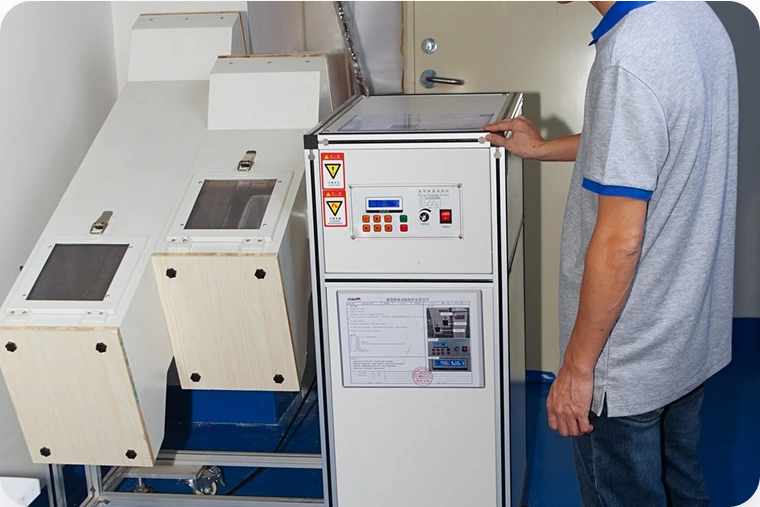
Plastic injection molding suppliers
This is not very common (fortunately) and is not always easy to prove, but it does happen and it is absolutely shocking. (See 10 examples of IP theft).
A ‘level 2’ supplier might decide to make 1 mold for 3 separate parts. It is technically possible. It is a smart approach to cut costs. However, it comes with a trade-off they usually don’t clarify upfront (remember, their DFM is quite basic or even non-existent). In some cases, the customer will point to a defect in one of those parts, but the plastic supplier will be forced to use the exact same injection parameters for all those parts. Fixing one defect here may lead to another defect appearing somewhere else.
The structure of a mold, for the same part, can be kept relatively simple or made relatively complex. The types of gates, the use of hot runners, and many other elements can make for a better result, but many buyers have no idea about those concepts. And, to reiterate an important point: if precision and overall appearance aren’t critical for the project, level 2 is often fine for consumer or B2B products, especially if the budget is tight.
Level 4
Plastic injection molding suppliers
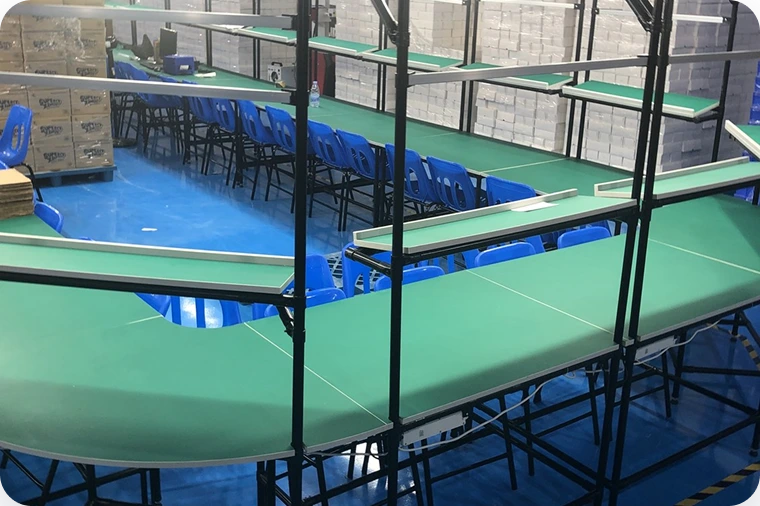
These suppliers tend to handle high-volume, high-quality plastic production.
Here are a few examples of such plastic workshops I have seen first-hand:
- Miele in Dongguan (final product: vacuum cleaners that come with a 20-year warranty) - definitely level 4
- Silver Basis (final product: parts of a compact car assembled in France under a Japanese brand) - somewhere around level 3.5 to 4
- Silver Basis (final product: parts of a compact car assembled in France under a Japanese brand) - somewhere around level 3.5 to 4
And it is typically the type of supplier Apple uses. If you haven’t heard Tim Cook and his admiration for China’s deep skills when it comes to tooling, watch this video.
If you plan to make very large production runs, and you need the molds to be made under international standards for easy transfer to, say, Mexico or Poland, you usually need to look at this level… or maybe ‘level 3’, but no lower.
Need Help Qualifying a Plastic Supplier?
Tell us about your parts. We can check whether a supplier fits your
quality, volume and tooling needs before you pay for a mold.
Different approaches to getting business
Let’s get back to the original question:
Why are quotations from plastic suppliers so widely distributed?
As I explained above, different suppliers can work at extremely different levels of sophistication. But there is one more factor that muddies the water quite a bit. Different types of tooling suppliers employ different pricing strategies.
Reducing the price of tooling by amortizing it by adding it to your production cost
Level 1 and level 2 suppliers often agree to reduce the price of tooling artificially and to amortize it by adding it to the price of production. Remember, their general objective is to keep the molds simple — often ‘as simple as they can get away with’. And they often outsource a part of the process, too.
But is that in the buyer’s interest? There are pros and cons.
Pros
On the one hand, some buyers really don’t have the means to finance the tooling, and it’s an opportunity to get into mass production with a lower investment.
Cons
On the other hand, I have seen a few serious downsides with this approach:
- If the production volumes are high, the buyer ends up paying far more in the long run
- The supplier does not release the tooling design files and will request a substantial extra payment before releasing the tooling (which may be poorly designed, to the point where a new mold may have to be fabricated anyway)
- The supplier sometimes believes the mold is partly their property and they can be tempted to show the parts to other companies and use the existing mold for those other customers
They give you a very low quote for both mold tooling AND plastic parts/products
Now, what if you see a quotation where both the mold cost and the plastic products/components cost are very low? Here is what comes to my mind:
- A ‘level 1’ supplier is probably involved.
- They may have made mistakes and they will realize later that they need to charge more (be ready for that).
- Their tooling may be scrapped after the initial trials, once they realize its results are not acceptable, and they might push you to pay for a new set of molds… In general, that’s not a good sign!
Follow this general rule of thumb when dealing with Chinese plastic suppliers
As a rule, as a customer, you need to keep in mind that many Chinese companies routinely do some engineering for free, but keep some intellectual property. If you’d like to read more about that, please see the description of the “Chinese model” in China Product Development Models and Risks.
Chapter 2
Questions to Ask Your Tooling and Plastic Supplier to Reduce Risks
By now, it is clear that Chinese plastic suppliers enjoy a clear competitive advantage in the production of many types of products. Local molds are made at roughly half the price and twice the speed when compared to Europe or North America. However, picking the right injection molding supplier is fraught with risk for buyers who don’t understand what the market is made of and what business strategies of various players are.
Risks of working with the wrong suppliers
Risk 1
Extending too much trust and forgetting to ask for basic protections
You may need to invest tens of thousands of dollars (or more) in tooling, which will be in the supplier’s hands.
Q: What is the company name of the supplier?
This is important to clarify from the start, as some people are tempted to simply say “Let me be your agent” and then they act as a trading company, making an undisclosed margin, and keeping the actual factory’s name a secret.
Needless to say, that tends to work rather poorly with the contract manufacturer that will need to buy those parts and will typically refuse to buy from a trading company.
Q: Based on the classifications of the 4 levels of plastic injection molding suppliers in China in Chapter 1, what grade is this supplier?
Q: Can I ask them some questions directly about their supply chain?
- Is tooling fabrication done in the exact same manufacturing facility, and the same company, as plastic injection molding? If not, where (company, and full address) do they take place?
- Can we come at any time during plastic injection molding?
- Can I see a photo of how you store the molds between 2 production runs? [This is best asked during a video call, actually.]
Q: Will you include the exact polymer model number, and polymer supplier’s name, in your quotations?
Q: What is the full company name of the supplier in Chinese characters?
Q: What parts did this supplier make for your other customers? Looking at your portfolio of past projects, please point them to me.
This will help establish if there really is a long-lasting cooperation between the designer and the supplier.
Q: Can I ask them some questions directly about their company?
- Do you design the tooling by yourself?
- Do you do CNC machining on hard metal in-house? And on the EDM electrodes?
- Do you do EDM machining in-house?
- Do you do wire cutting in-house?
- Can we come at any time during tooling fabrication?
The more they do in-house, the higher their technical understanding, and the tighter their control over quality.
Q: Can we sign a contract directly with the plastic supplier that allows us to pull the tooling at any time for no reason, with penalties in case they don’t make the tooling available within 5 working days? And that contract will call for litigation in China since the tooling will be in China.
Risk 2
Forgetting to require the basic commitments
Here is another list of questions you might want to ask:
Q: With the chosen polymer, how many shots is the mold likely to withstand?*
Without that information, you can’t make an informed decision. Just over the past year, I have been involved in 2 separate cases where the customer thought they had a mold ready for making tens of thousands of shots, and they discovered that they had to start making a new mold after only a few hundred shots were made.
*Note: What if you DON’T ask about the mold’s lifetime?
You might get the opposite of what you need… when the tooling supplier has no objective about lifetime, they can cut their costs dramatically:
- They buy lower-quality and non-hardened steel. Sometimes we see steel that is so bad it has marks and it can’t be nice and smooth even after much polishing.
- They save money in machining, since the steel is much softer.
- They rationalize that it’s “just a fast prototyping mold”, so they do rough machining. Sometimes we see very clear CNC marks on the steel… and of course, this translates into a lot of quality issues on the plastic parts.
And, you might ask, what about timing? Will it be much cheaper, since it’s “fast prototyping molds”?
The sad truth is, it’s only about 8 to 10 days faster… count 4 to 5 weeks vs. 6 weeks.
Q: Will you prepare a DFM report when your tooling designer starts to work on this project?
Will it include:
- Plastic polymer shrinkage rate
- Tooling materials (for the cavity, the core, but also the lifter and the sliders if any)
- Type of machine needed (what clamp force?)
- Gate analysis, with visual(s)
- Parting line analysis, with visual(s)
- Appearance analysis, with visual(s)
- Draft angle analysis, with visual(s)
- Wall thickness analysis, with visual(s)
- Mold configuration analysis (how the various parts come together), with visual(s)
- Ejection analysis, with visual(s)
- Mold layout, with visual(s) and key dimensions
- Other issues noticed, and suggested solutions
All tooling suppliers say they will do DFM when asked, but not all do it carefully and discuss it clearly with their customers.
Risk 3
Opening tooling too early
This is a trap inexperienced product developers are quite likely to fall into.
You have some 3D-printed parts, things are looking good, and a gentle hand is pushing you to start working on tooling… you want to get to market fast, right?
Not so fast. If you have been working on designing a new product, you need to think of how to validate the product design before you start developing the manufacturing & testing processes.
This usually involves questions such as:
- Q: Are target users/customers happy with the prototypes?
- Q: Are all performance requirements met? Are you sure you haven’t forgotten any such requirement (e.g. ‘can connect to a smartphone with Bluetooth from 50 meters away’)?
- Q: Have you done accelerated reliability testing, to confirm there are no design weaknesses (e.g. a waterproof enclosure)?
- Q: Was the entire product design reviewed by manufacturing professionals to ensure it is manufacturable with a low risk of quality issues (in other words, a ‘design for manufacturing’ and ‘design for quality’ review)?
- Q: Is there any other important assumption that needs to be validated now? Maybe putting together one more prototyping build is necessary?
Remember, once the tooling fabrication has started, changing the product design becomes much more expensive in time and money. Some molds may even have to be re-made from scratch at great expense.
Risks of working with the wrong suppliers
Let’s look at the main risks and how to mitigate them.
Risk 1:
Extending too much trust and forgetting to ask for basic protections
Working with the wrong supplier can be catastrophic.
You may need to invest tens of thousands of dollars (or more) in tooling, which will be in the supplier’s hands.
It means they might decide to keep it hostage and extract concessions from your side — for example, they might require full payment after they completely mess up a production order (wrong color, serious shrink marks, etc.). That’s not a hypothetical risk! It happens every day and is very, very frustrating.
Here are some important questions to ask about them:
Q: What is the company name of the supplier?
Q: What is the full company name of the supplier in Chinese characters?
Q: What parts did this supplier make for your other customers? Looking at your portfolio of past projects, please point them to me.
Q: Based on the classifications of the 4 levels of plastic injection molding suppliers in China in Chapter 1, what grade is this supplier?
Q: Can I ask them some questions directly about their company?
- Do you design the tooling by yourself?
- Do you do CNC machining on hard metal in-house? And on the EDM electrodes?
- Do you do EDM machining in-house?
- Do you do wire cutting in-house?
- Can we come at any time during tooling fabrication?
Q: Can I ask them some questions directly about their supply chain?
- Is tooling fabrication done in the exact same manufacturing facility, and the same company, as plastic injection molding? If not, where (company, and full address) do they take place?
- Can we come at any time during plastic injection molding?
- Can I see a photo of how you store the molds between 2 production runs? [This is best asked during a video call, actually.]
Q: Can we sign a contract directly with the plastic supplier that allows us to pull the tooling at any time for no reason, with penalties in case they don’t make the tooling available within 5 working days? And that contract will call for litigation in China since the tooling will be in China.
The typical low-technical-maturity plastic suppliers will balk at that. Or they will sign a contract, while still clinging to the idea that molds should not just get pulled. So, asking this question in a call is more revealing than in an email.
Q: Will you include the exact polymer model number, and polymer supplier’s name, in your quotations?
Risk 2:
Forgetting to require the basic commitments
Q: With the chosen polymer, how many shots is the mold likely to withstand?*
Without that information, you can’t make an informed decision. Just over the past year, I have been involved in 2 separate cases where the customer thought they had a mold ready for making tens of thousands of shots, and they discovered that they had to start making a new mold after only a few hundred shots were made.
*Note: What if you DON’T ask about the mold’s lifetime?
- They buy lower-quality and non-hardened steel. Sometimes we see steel that is so bad it has marks and it can’t be nice and smooth even after much polishing.
- They save money in machining, since the steel is much softer.
- They rationalize that it’s “just a fast prototyping mold”, so they do rough machining. Sometimes we see very clear CNC marks on the steel… and of course, this translates into a lot of quality issues on the plastic parts.
Q: Will you prepare a DFM report when your tooling designer starts to work on this project?
Will it include:
- Plastic polymer shrinkage rate
- Tooling materials (for the cavity, the core, but also the lifter and the sliders if any)
- Type of machine needed (what clamp force?)
- Gate analysis, with visual(s)
- Parting line analysis, with visual(s)
- Appearance analysis, with visual(s)
- Draft angle analysis, with visual(s)
- Wall thickness analysis, with visual(s)
- Mold configuration analysis (how the various parts come together), with visual(s)
- Ejection analysis, with visual(s)
- Mold layout, with visual(s) and key dimensions
- Other issues noticed, and suggested solutions
Risk 3:
Opening tooling too early
This is a trap inexperienced product developers are quite likely to fall into.
Not so fast. If you have been working on designing a new product, you need to think of how to validate the product design before you start developing the manufacturing & testing processes.
This usually involves questions such as:
- Q: Are target users/customers happy with the prototypes?
- Q: Are all performance requirements met? Are you sure you haven’t forgotten any such requirement (e.g. ‘can connect to a smartphone with Bluetooth from 50 meters away’)?
- Q: Have you done accelerated reliability testing, to confirm there are no design weaknesses (e.g. a waterproof enclosure)?
- Q: Was the entire product design reviewed by manufacturing professionals to ensure it is manufacturable with a low risk of quality issues (in other words, a ‘design for manufacturing’ and ‘design for quality’ review)?
- Q: Is there any other important assumption that needs to be validated now? Maybe putting together one more prototyping build is necessary?
Remember, once the tooling fabrication has started, changing the product design becomes much more expensive in time and money. Some molds may even have to be re-made from scratch at great expense.
Another approach altogether:
Picking a contract manufacturer first and relying on them
If your product requires assembly and testing, you will need to pick the factory that will take care of those operations. Since it’s the last factory that will touch the products before shipment, it is your “main supplier” and they will naturally orchestrate the rest of the supply chain. Let’s call them the contract manufacturer (CM).
Now, you may have heard of cases where a factory sells a product directly to its customer’s competitors or even to its customer’s customers. That’s one of the main things you need to watch out for.
You may be tempted to ‘compartmentalize’ your supply chain. Sometimes the plastic supplier, the PCBA supplier, and others are already decided when the CM enters the picture. In a way, that makes sense, and the customer feels they have more control overall. For example, the PCBA supplier needs to get their hands on the firmware, but the CM doesn’t need it.
However, there may be a few issues with that:
Can you do a better job of picking those suppliers than your CM? Probably not.
If (or ‘when’) there are issues with the product’s function and someone needs to do troubleshooting, that someone may need access to the firmware. If the CM has engineers who can look into it, will you forego that option?
The CM will be much better able to control a supplier that they have picked, that is (probably) very close to them, and that has signed their contract. The cooperation with a supplier you direct may have bumps and you will have to manage that.
That’s why picking the right CM is so important. You have to trust them, at least to a certain point.
If there is no such trust, you are probably not working with the right people. They can manage the supply chain while leaving the suppliers in the dark about what the end product does, as explained in Compartmentalizing the supply chain – IP Protection in China when Developing Your New Product [Importer’s Guide]. They might be able to make a lot of parts internally, which means you don’t even need to worry about picking the right plastic supplier and controlling them…
Appendix
Useful links and resources.
Thermoplastics Overview
Thermoplastics are a versatile category of plastics used in a wide range of applications. Common materials include polypropylene (PP), acrylonitrile butadiene styrene (ABS), and polycarbonate (PC). Each offers different benefits in terms of durability, flexibility, and cost, making them suitable for various manufacturing needs.
For more details on thermoplastics, visit:
Plastic Injection Molding Process
The injection molding process involves melting thermoplastic material and injecting it into a mold to form a part. Key variables in this process include material selection, mold design, and cycle time. Proper control of these parameters is essential to avoid defects like warping, shrinkage, or incomplete fills.
For more on injection molding, visit:
Get Help With Your Plastic Products


Agilian (Dongguan Agilian Technologies Co., Ltd.) is certified to ISO 9001:2015 (FM 763143) and ISO 14001:2015 (EMS 774980).
Quick Links
Contact
Agilian Technology Co. Ltd.
Unit 203, 2nd Floor, Haorong Zhichuang Science & Technology Building,
No. 47 East 1st Street, Xingfa South Road,
Wusha Community, Chang'an Town,
Dongguan, Guangdong, China 523859
Phone (CN): +86 133 4263 0352
Email: inquiries@agiliantech.com
Opening hours (China time):
Mon–Fri: 08:30–18:00
Sat: 08:30–13:00
Sun: Closed
We respond to all inquiries within 24 hours.

