
When people think of plastic parts, they often overlook the complexity behind the molds that produce them. However, the tooling used to manufacture plastic parts are precision-engineered systems made of many plastic injection mold components working in harmony. Understanding these parts helps highlight just how intricate and sophisticated mold-making truly is, far beyond just cutting a cavity into metal.
For a deeper look at how injection molded parts are made in China, you can explore Agilian Technology’s plastic injection molding services.
Key Plastic Injection Mold Components
Mold Base
The mold base acts as the fundamental supporting framework for the entire mold. It provides stability and houses other components.
Cavity
The cavity shapes the external structure of the molded product. It matches the desired final shape of the part.
Core
The core forms the internal features of the molded part. It works with the cavity to create a full 3D shape.
Ejection Pins
Once the plastic cools and solidifies, ejection pins push the part out of the cavity without causing damage. These are critical precision mold components for ensuring clean part removal.
Runner System
This system channels molten plastic from the injection nozzle to the mold cavities. It includes sprues, runners, and gates.
Cooling System
Cooling channels carry water or another coolant to control mold temperature. This ensures consistent part quality and cycle times.
Venting System
Vents let trapped air and gases escape during injection. Poor venting can lead to burn marks or incomplete filling.
Guide Pins and Bushings
These components ensure the two mold halves align correctly when the mold closes, which is critical for the dimensional accuracy of the molded part.
Sprue Bushing
The sprue bushing centers the injection nozzle and allows molten plastic to enter the runner system efficiently.
Clamp Plates
Clamp plates fasten the mold securely to the injection molding machine’s platens during the molding cycle.
Ejector Plate System
This system moves the ejector pins as a unit, ensuring reliable ejection of molded parts.
Inserts
Inserts are specialized components placed into the mold to form complex shapes or reinforce weak areas.
Note: the typical component types listed above are just some of the most common ones. The list would be much longer if we listed all relatively commonly used components.
A Glimpse into the Details of Plastic Injection Mold Components
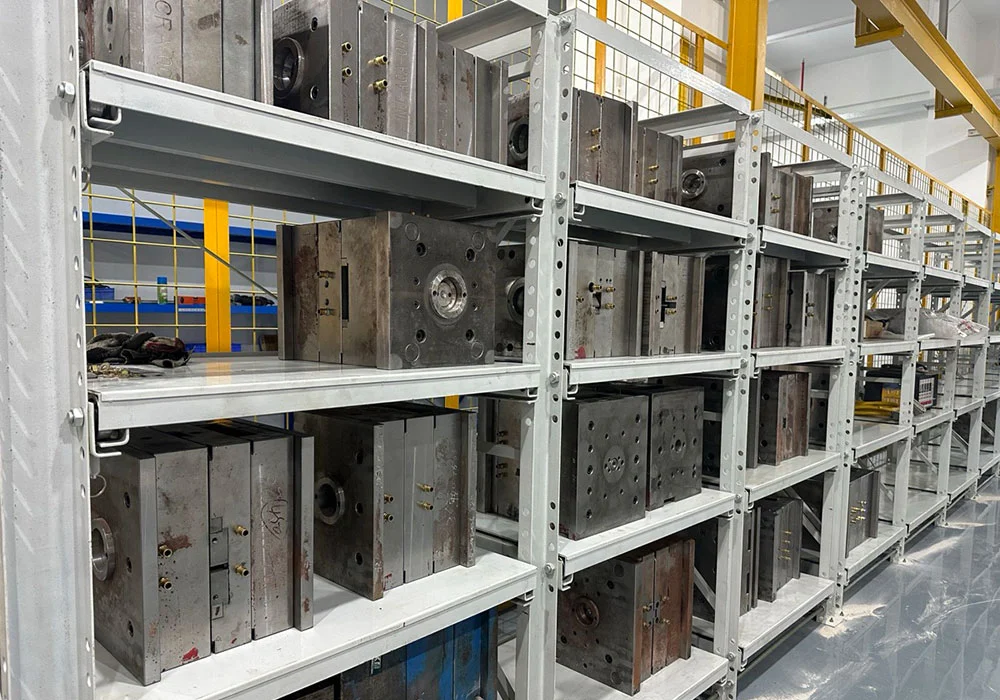
Injection mold tooling may look like a fairly solid block of steel when finished:
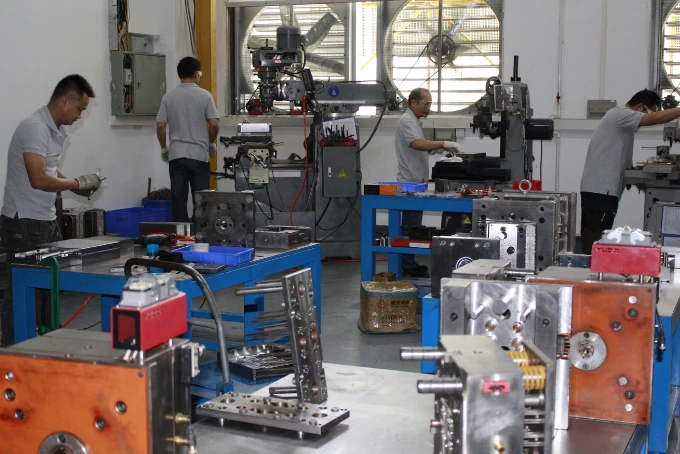
But you can see the many components used to make them when they are being fabricated:
The types of plastic injection mold components commonly included are ejector pins, guide pins, and numerous other fittings:
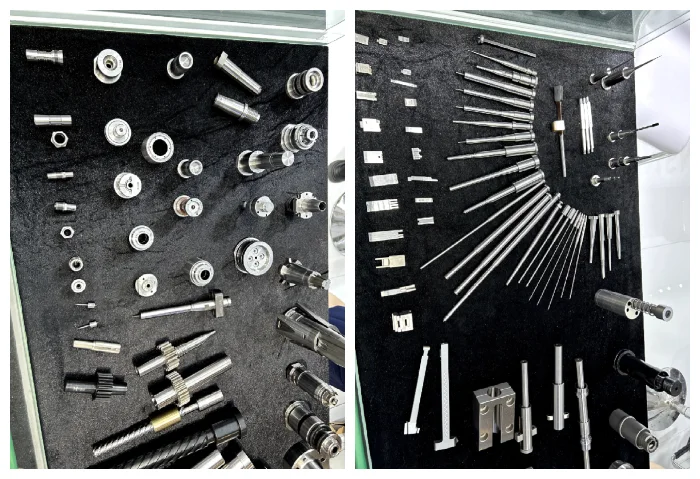
These photos represent just a small sample of the many precisely engineered parts that must work together seamlessly to ensure the success of the plastic mold design.
Conclusion: Why Mold Tooling Design Matters
Behind nearly every plastic part lies a highly engineered mold made up of dozens (if not hundreds) of components. From guiding molten plastic into form to ejecting the final part without damage, each piece plays a vital role. This complexity is a testament to the skill and precision required in mold tooling design, and it’s why selecting the right tooling partner is so important.
In some cases, a prototype mold may be the right step before committing to full production. In others, care must be taken to avoid costly tooling revisions.
Whether you’re starting out with a new plastic product or optimizing an existing one, understanding the components of an injection mold is key to better results.
Related reading
- Frequently asked questions about the process of plastic injection molding.
- Learn more about reducing errors and costs in this system through DFM improvements on molded parts.
- An emerging rapid tooling approach is Fast Iterative Tooling with 3D printed molds.