
Most founders say they’ll iterate. Very few live it the way this creator, Noam Eizenberg, did: invested $40,000, ~4,000 hours, and created ~190 hardware prototyping iterations to bring a portable heated massager for TMJ (jaw pain) from idea to product, then kept improving it while selling.
I watched his video and have pulled out some key points worth noting for other hardware startups with electromechanical devices like this.

What makes his story valuable is not the number of prototypes, but what the hardware prototyping process taught him, and how he used those lessons to reach production and scale.
What we learnt about hardware prototyping iterations from this video
What’s great about Eizenberg’s video is that it shows you how hardware actually gets built when you don’t have investors, a big team, or the luxury of getting everything “perfect” before launch.
1) Your first “finished” design is rarely finished
At around the 22-minute mark, Eizenberg pans across an entire table of physical prototypes, different casings, internal layouts, tips, button solutions, and mounting methods. This is a normal part of the hardware product development process, not an exception.
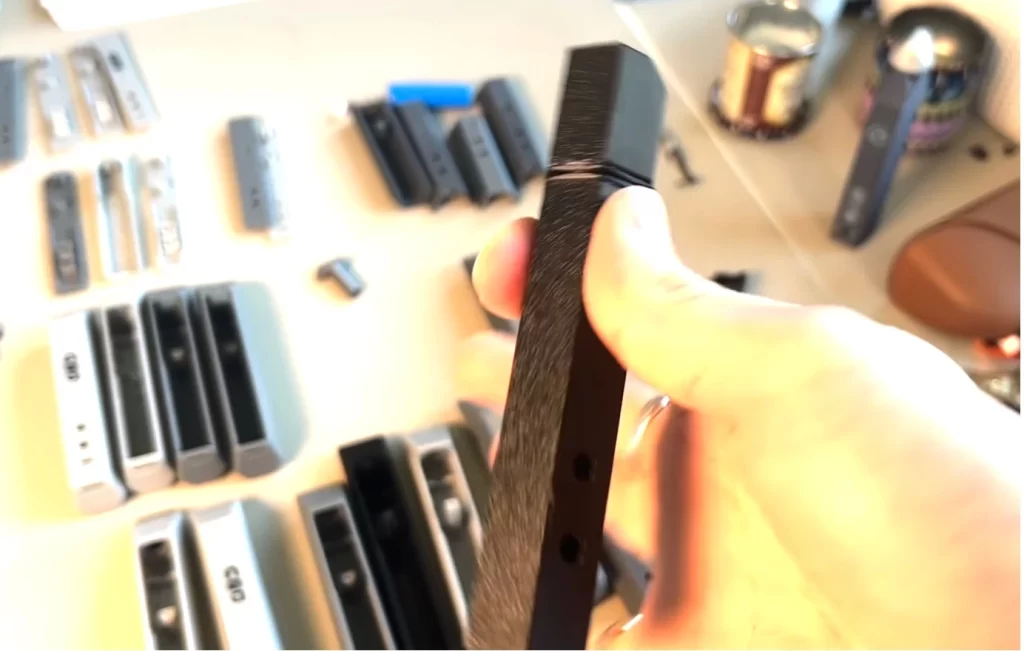
The point isn’t the number. It’s what those prototypes represent:
- Every change exposed a new challenge (assembly access, part retention, noise, heat control, cable routing, tolerance stack-ups).
- Mechanical and electronics work happened in parallel, not in a clean sequence.
- “Small” choices (like a motor shaft length changing between prototype and production units) created real-world failures, like rattle, audible whine, and inconsistency.
We learn that we need to be prototyping to invalidate assumptions, or we’re just making expensive renders.
2) Ship early, before you lock yourself into tooling
At around 27 minutes, he describes shipping while the product was still far from perfect, and, importantly, before investing in production tooling like injection molds. 3D printing can be a relatively adequate option for his product, fortunately.
This is an interesting move because tooling is an expensive commitment for hardware startups like his company, and he mentioned that making changes to the product after tooling was made would cost him US$10,000 per change, and soon bankrupt him, which is a good point. Once you’ve paid for molds, you’d better be sure that you’re ready to manufacture at scale with no further design changes!
This approach also aligns with a pattern we find can work for some startups and entrepreneurs: start with domestic (or in-house) assembly to learn fast, then move manufacturing (to China or Asia), lock designs, and cut steel for tooling, when the design and demand are proven.
If you’re considering that path, this related read is worth your time: Starting Domestic Assembly, Then Moving Manufacturing to China: Pros & Cons
3) Marketing isn’t a department when you’re early; it’s the job
At around 34 minutes, he lays out the grind: daily Instagram posts, Reddit + YouTube distribution, DM-based early sales, a lead magnet (ebook), and a crowdfunding campaign; all done without burning huge budgets.

This shows us that momentum is manufactured. If you want traction, you need output, and you need to be getting feedback from real people so you can gauge what’s working. Social media was a grind, but his consistency paid off, and this is accessible to any determined startup.
4) Improve between batches (and accept “good enough” packaging at first)
Around 38 minutes, we see that he shipped early batches with packaging that clearly wasn’t “Apple-level” or anywhere close to it, then improved as he learned.
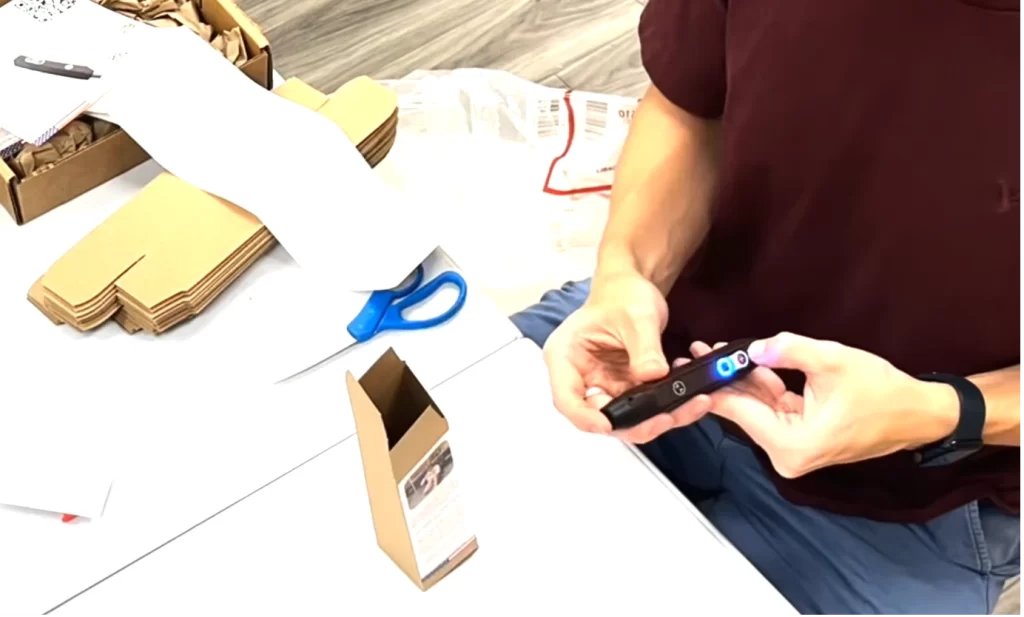
Then, at around 51 minutes, he talks about design improvements made between the first three production batches: fixing charging behavior, LED brightness, component robustness, electrical noise, and more.
This is how smart bootstrapped hardware scales:
- Batch 1: prove it works, prove people will pay, find the ugly failures
- Batch 2: fix the top complaints and the safety/quality risks
- Batch 3: mature the design and prep for certifications + scale
The real skill is deciding what must be solved now vs what can wait until the next run.
Your key hardware prototyping Iterations takeaways
If you’re building hardware, the goal isn’t to “avoid iterations,” after all, Eizenberg had 190 hardware prototyping iterations! Each prototype iteration is a learning experience, but the goal is to iterate cheaply, learn quickly, and lock in decisions only when the evidence is there.
This case study demonstrates several key principles of successful hardware product development:
-
Expect many iterations before reaching production stability
-
Use low-volume production to validate designs before tooling
-
Improve the product between production batches
-
Collect real customer feedback as early as possible
-
Transition to mass production only when the design is mature
If you need help with prototyping, Agilian can support you with DFM reviews, supplier coordination, and production readiness, without forcing you into tooling too early.