
- What we do for you
- About Us
About Us
- Why Choose Us
Why Choose Us
In-house Equipment
Other Important Topics
- Resources
Resources
- Contact Us
- What we do for you
- About Us
About Us
- Why Choose Us
Why Choose Us
In-house Equipment
Other Important Topics
- Resources
Resources
- Contact Us
Electronic Play Mat
Turning a screen free play concept into a reliable, manufacturable product through DFM, supplier development, custom material validation, SOPs, tooling, testing, and pre production support.
⌂ > Case Studies > Electronic Play Mat
A screen free play product with a surprisingly complex manufacturing challenge
This is a children’s electronic play-product* built around an active play mat. Children step on different areas of the mat to trigger actions, sounds, and game modes. A rotating arm can move at different speeds and heights, so children can jump over or move under it depending on the game being played.
The product was designed to encourage physical play without relying on a phone, tablet, or screen. The user proposition was clear, but the engineering and manufacturing path was demanding. The mat needed to be safe, anti-slip, sensitive enough to detect foot pressure, durable enough for repeated jumping, and consistent enough to assemble in production.
The client came to Agilian with an existing concept, prototypes, and basic product requirements. Agilian’s role was to help identify production risks, improve the design for manufacturing, develop and manage key suppliers, create the assembly and quality control process, build tooling and jigs, and support the move into pre-production.
*Specific product information communicated with customer approval
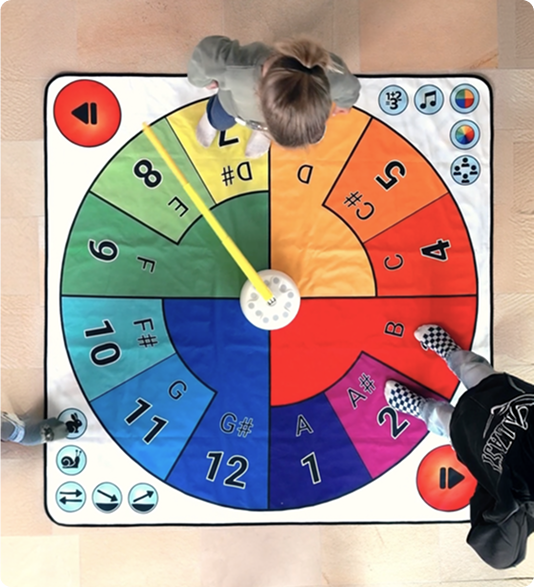
PRODUCT type
Main user benefit
Encourages physical play, individual or group games, and movement away from screens.
CORE CHALLENGE
Agilian scope
DFM review, supplier validation, SOPs, quality planning, jigs, tooling, and pre production support.
A working prototype had to become a safe, repeatable, production ready children's product
The core product idea was already defined, but the product was not yet ready for stable production. Several of the most important risks were hidden inside the mat itself: material shrinkage, layer alignment, conductivity, touch detection, anti-slip behavior, and long-term durability under children jumping and playing.
Multi layer mat behavior
TPU shrinkage and material fit
TPU layers shrank more than expected, making the five layer structure difficult to match. Real measured dimensions became critical.
Conductivity and sensing reliability
Conductive layers, resistance, printing, and connector reliability all had to be controlled so foot presses were detected correctly.
Child safety and anti slip performance
The mat could not slide during play, and the rotating arm needed safe disengagement behavior when touched.
Custom supplier capability
Timeline and cost pressure
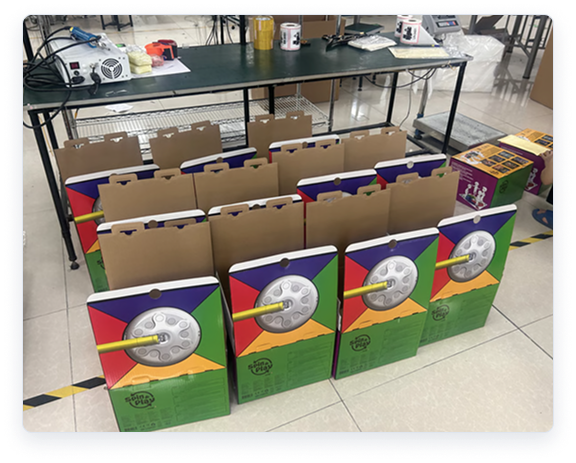
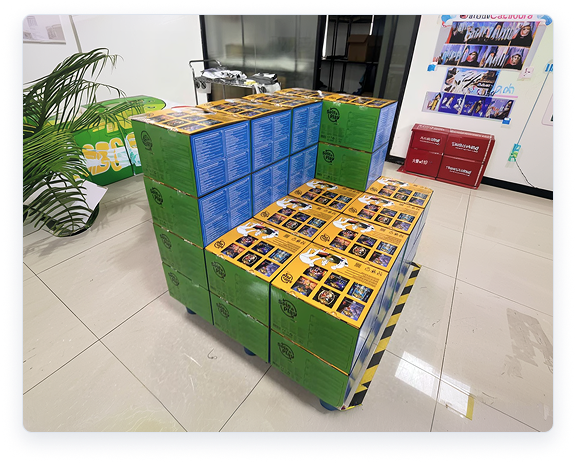
From DFM review to pre production learning
The project moved through several overlapping workstreams. Agilian had to work on the product design, material stack, supplier network, assembly method, tooling, quality plan, and customer communication in parallel.
Key areas where development effort mattered most
The main complexity came from custom materials, large format components, sensing reliability, child safety requirements, and the need to turn supplier variability into a controlled process.
Layer matching and TPU shrinkage control
Measured dimensions were used to sort and match TPU layers rather than relying only on nominal drawings.
Custom top fabric and supplier process support
Anti-slip bottom film development
Conductive TPU and printing requirements
Assembly tools and testing jigs
Agilian developed jigs for PCBA, magnet and Hall sensing, measurement, cutting, welding, assembly, and final checks.
Rotating arm and safety behavior
The rotating arm needed multiple speeds and heights, plus a safe disengagement behavior when touched, adding both control and mechanical complexity.
The product had to balance active play, safety, durability, and cost
The play mat looks simple from the outside: a child steps on a mat and plays a movement game. In production terms, it is much more complex. The mat behaves like a soft-good product, a sensor, a safety-critical surface, and an electronic subsystem at the same time.
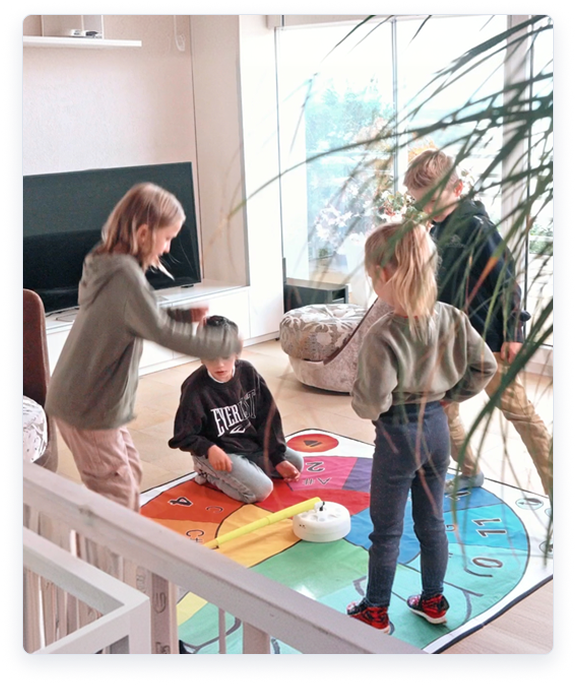

The product was not just an electronic mat. It was a soft goods system, a sensing system, a safety surface, and a moving game mechanism. The production challenge was making all of those layers work together reliably.
Before vs After
A clear comparison showing the shift from a complex, hard-to-build prototype system to a more controlled production process.
Before
- Working concept and prototype, but not yet production stable
- Five layer mat structure vulnerable to TPU shrinkage and mismatch
- Top fabric, TPU, and anti slip film suppliers still needing validation
- Assembly SOPs and quality plans still being refined through iteration
- Large pre production quantity requested despite unresolved material risks
- Cost down needs competing with safety, durability, and reliability requirements
After
- Clearer material matching process based on actual measured layer behavior
- Improved supplier support and backup supplier strategy for custom materials
- Assembly and testing processes refined through pre production builds
- Dedicated jigs introduced for assembly, measurement, welding, PCBA, and functional testing
- Split delivery approach used to manage schedule pressure while issues were addressed
- Future cost down path identified through electronics, structural, and material alternatives
A complex children's play product moved closer to stable production
The project reached pre-production with a much clearer understanding of the material, supplier, assembly, and testing risks that needed to be controlled. The value of the case study is not in exposing confidential production data, but in showing how a promising active-play concept was translated into a more realistic manufacturing pathway.
Production risk made visible
The team identified the real manufacturing risks behind the mat stack, including shrinkage, layer alignment, conductivity, anti-slip behavior, supplier readiness, and assembly variability.
Supplier pathway strengthened
Difficult custom materials were sourced, validated, and improved with supplier support. Backup supplier work reduced interruption risk.
Assembly repeatability improved
SOPs, quality planning, and dedicated jigs helped move the product away from operator-dependent assembly and toward more controlled production.
Material validation lessons captured
The team captured a clear lesson for future projects: validate material behavior earlier and with smaller builds before committing to larger pre-production quantities.
Cost-down pathway identified
The team identified future reductions through lower-cost electronics, structural changes, and material alternatives while protecting the product’s safety and function.
Safety and reliability focus reinforced
Because the users are children, the project placed extra emphasis on anti-slip behavior, rotating-arm safety, durable mat sensing, and reliable play performance over time.

Help bring active, screen free play to more families.
This product is launching now on Kickstarter
We’re proud to have helped bring this interactive play product to life. This screen free game encourages children to move, think, and have fun together.
Support the project by becoming a backer on:

Building a product that combines electronics, custom materials, and real-world use conditions?


Agilian (Dongguan Agilian Technologies Co., Ltd.) is certified to ISO 9001:2015 (FM 763143) and ISO 14001:2015 (EMS 774980).
Quick Links
Contact
Agilian Technology Co. Ltd.
Unit 203, 2nd Floor, Haorong Zhichuang Science & Technology Building,
No. 47 East 1st Street, Xingfa South Road,
Wusha Community, Chang'an Town,
Dongguan, Guangdong, China 523859
Phone (CN): +86 133 4263 0352
Email: inquiries@agiliantech.com
Opening hours (China time):
Mon–Fri: 08:30–18:00
Sat: 08:30–13:00
Sun: Closed
We respond to all inquiries within 24 hours.

