
- What we do for you
- About Us
About Us
- Why Choose Us
Why Choose Us
In-house Equipment
Other Important Topics
- Resources
Resources
- Contact Us
- What we do for you
- About Us
About Us
- Why Choose Us
Why Choose Us
In-house Equipment
Other Important Topics
- Resources
Resources
- Contact Us
Sous Vide Appliance
Helping an innovative food-tech company turn a working concept into a manufacturable connected appliance with water handling, cooling, heating, sealing, insulation, electronics, and assembly process challenges.
⌂ > Case Studies > Sous Vide Appliance
Turning a highly innovative cooking appliance into a manufacturable product
This product is an all-in-one connected sous vide appliance designed to keep food cool, vacuum-seal it, and automatically cook it so a meal is ready at the time chosen by the user.
Agilian supported the project by reviewing and adapting the structure for manufacturing, setting up and improving suppliers, supporting tooling and sample builds, developing assembly methods, testing key functions, and helping the product move through pilot and small-batch production stages.
Customer type
Food-tech / connected kitchen appliance company.
Main challenge
Convert a complex functional prototype into a repeatable, cost-controlled production process.
Product Complexity
Agilian scope
DFM input, mechanical optimization, supplier setup, tooling coordination, assembly engineering, PVT / MP1 support, testing, and logistics.
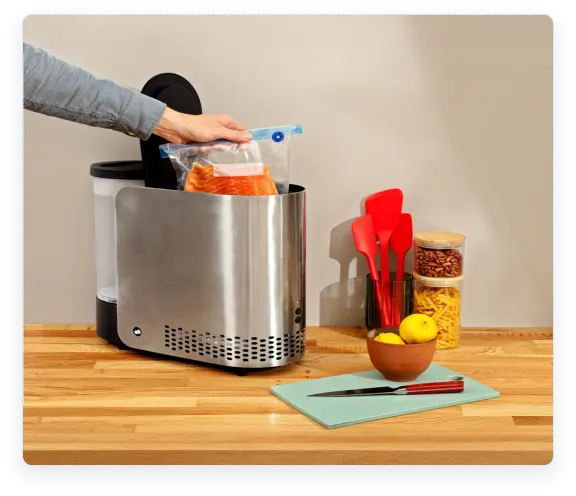
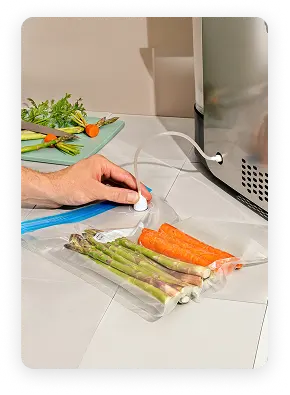
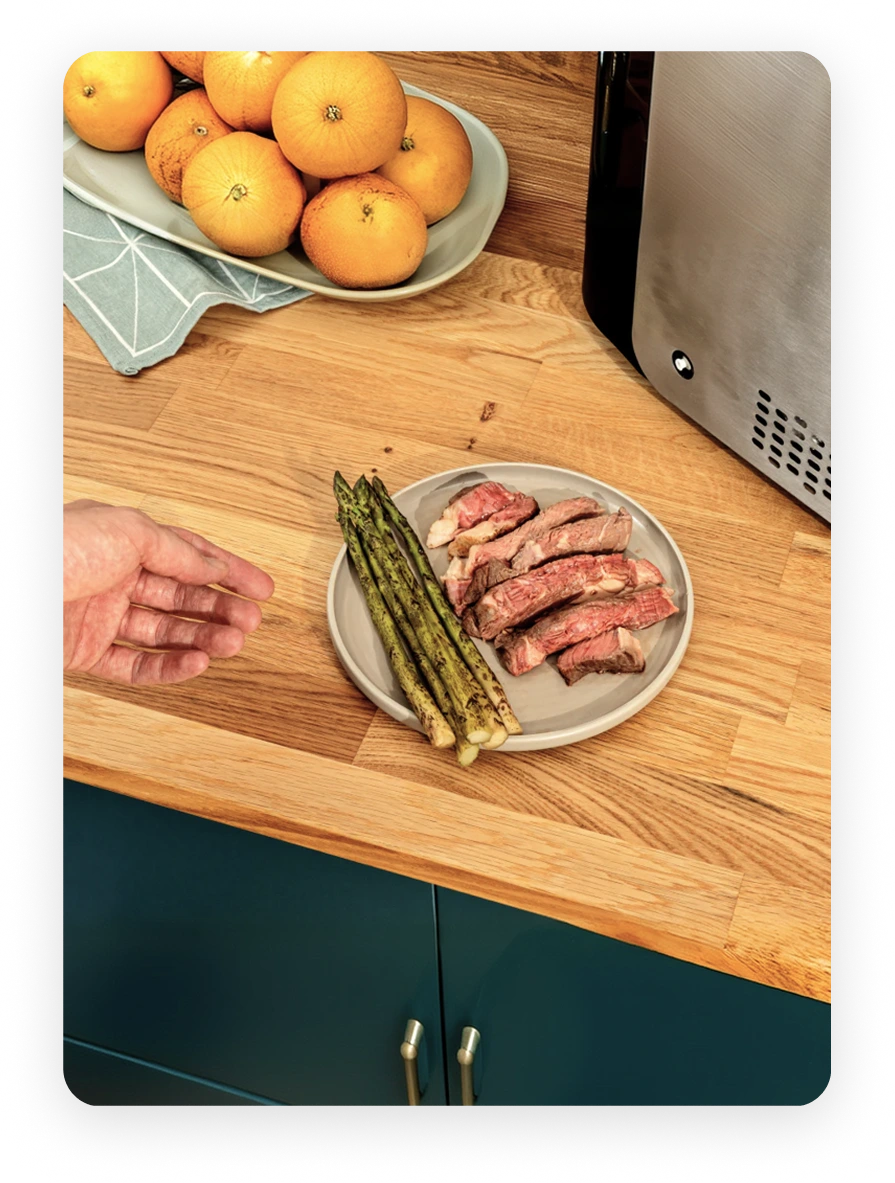
A working prototype was not enough —
the manufacturing system had to be engineered too
A working prototype was not enough — the manufacturing system had to be engineered too
The appliance needed to control temperature, move water reliably, maintain insulation, prevent leaks, protect electronics, look premium, and meet end-user and regulatory expectations. The challenge was making it work consistently in production.
Complex multi-function system
PU foam insulation and sealing
Liquid foam had to fill the cavity without gaps, overflow, shell distortion, or difficult to clean residue.
Water path reliability
During repeated testing, impurities could enter the water path and affect pumps, valves, or tubing, making water quality and filtration practical controls.
Premium metal exterior
The metal shell had to look good and remain robust, while surface finishing created tradeoffs between scratch resistance, fingerprints, UV coating defects, and reworkability.
Assembly complexity
The bottom area concentrated pumps, cooling components, fan, Peltier module, wiring, sealing, and water-management details.
Cost and supplier pressure
Agilian had to compare suppliers, reduce high-cost components where possible, and simplify assembly without damaging performance.
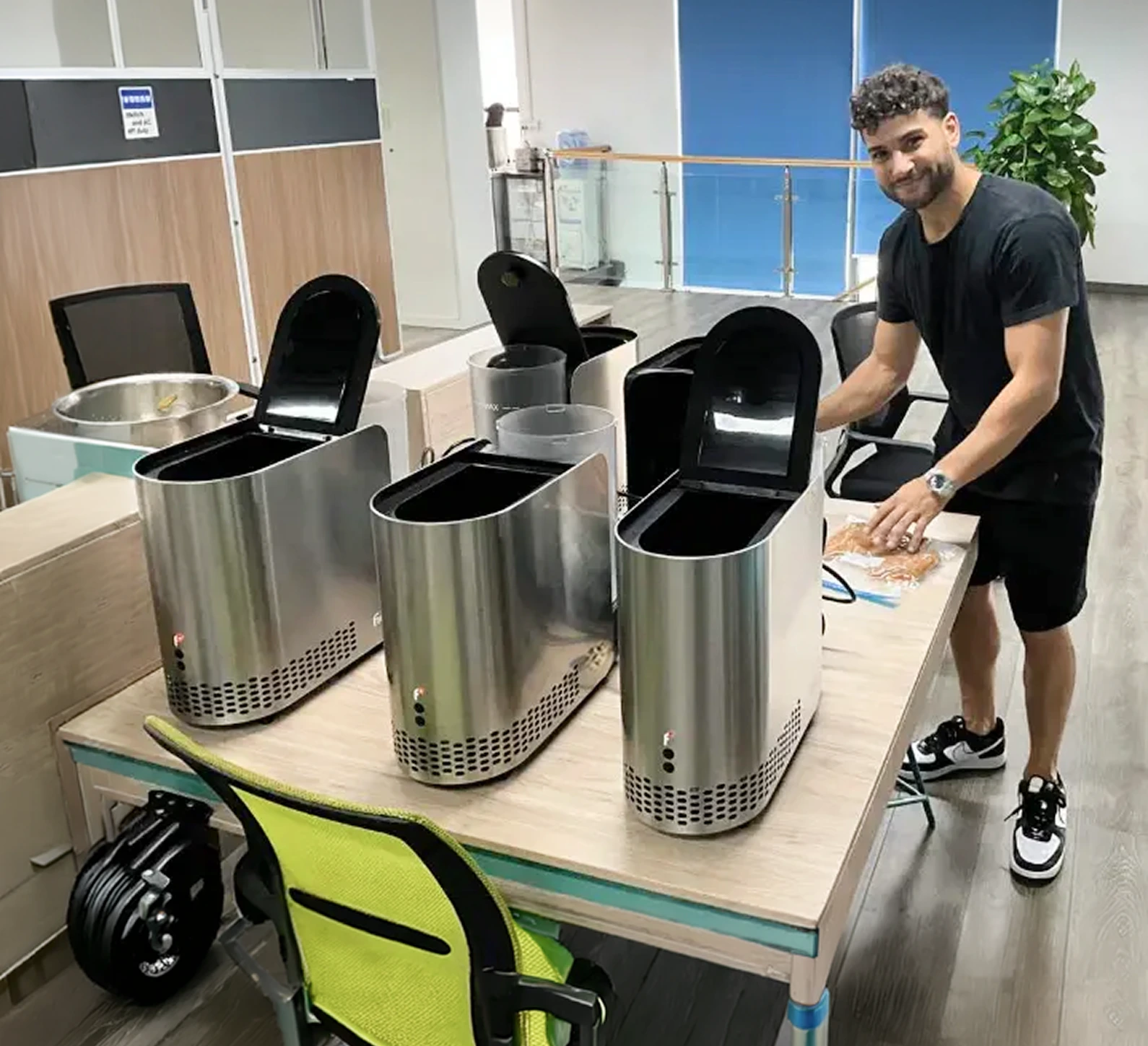
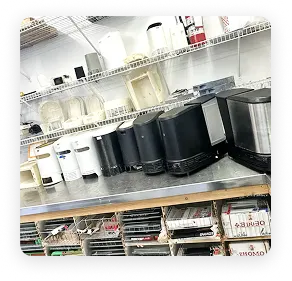
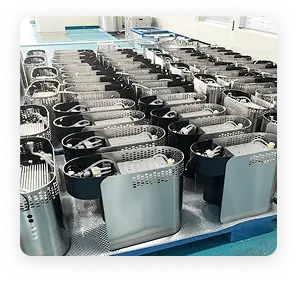
From DFM and supplier setup to pilot production and production support
The project moved through several overlapping workstreams.
Agilian did not treat this as a linear handoff from design to factory.
The product required repeated build-test-adjust cycles, with engineering, sourcing, production, and the customer working together.
assembly efficiency, product quality, and manufacturability.
and tackle difficult parts such as the thin formed metal outer shell.
PU foam behavior, water movement, and electronics integration.
air-tightness checks, PU foam filling, and final product testing.
validation, with continued process control and cost reduction work.
Key areas where Agilian's development effort mattered most
PU foam filling process
Control foam saturation and overflow, validate internal containment, and use bottom-cover assembly before foam filling to limit expansion height.
Sealing and leakage control
Work on silicone pre-sealing, air-tightness testing, cavity sealing jigs, and fixtures to reduce foam leakage and water-leakage risks.
Metal shell and fixture control
Use form-fitting fixtures to limit shell deformation during foam expansion and review supplier capability for difficult formed-metal edges.
Pump, water path, and testing controls
Identify water impurities as a practical risk for pump stoppage and blockage, then update water standards and cleanliness controls for testing.
Assembly simplification
Change vacuum connector installation from glue fixation to a mechanical inner/outer cover fixing method for easier and more consistent line assembly.
Supplier and cost management
Compare suppliers for the same or similar components and continue to search for cost-down opportunities while protecting function and quality.
The product had to
be designed around production realities,
not only product features
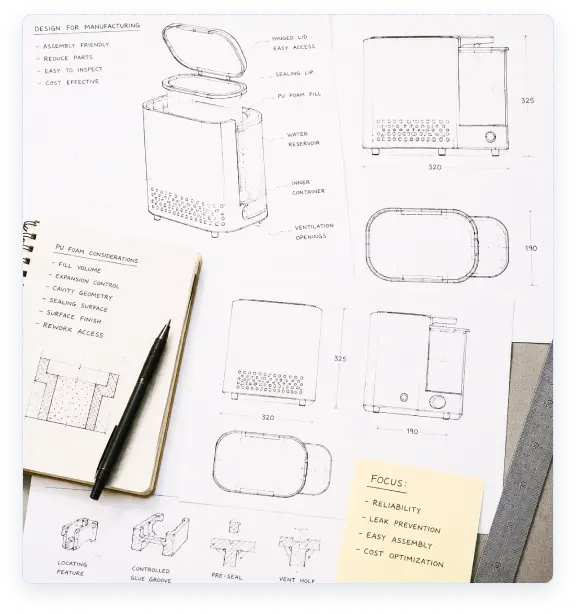
One of the key lessons from the project is that assembly line design can drive product design changes. Once the manufacturing process was studied in detail, some design choices had to be adapted to make the product easier to build, test, seal, and inspect.
The PU foam process made this especially clear. Foam filling is sensitive to quantity, sealing, cavity geometry, expansion control, surface finish, and rework options. When those factors are not designed in early, the production team has to compensate with fixtures, tape, cleaning, rework, or part replacement.
For similar future products, Agilian would push earlier for manufacturing-oriented sealing features in the design itself — such as locating features, clips, controlled glue grooves, pre-sealing steps, repairable surface finishes, filtration, and clearer water-path controls.

Our product was far more complex than a normal countertop appliance. Agilian helped us work through the production details that only become visible when you start building the product repeatedly — sealing, foam filling, water movement, supplier choices, assembly steps, and testing. That support helped move the product from prototype thinking toward real production.
A complex connected appliance moved toward stable production
After repeated engineering, pilot-build, and production iterations, the product progressed into small-batch production.
The most important result was not a single design change, but a more complete production system: suppliers, assembly sequence, test controls, sealing methods, foam process controls, and known risk areas were all made clearer.
Small-batch production supported
The product moved through pre-production and into small-batch production, with ongoing manufacturing support and delivery coordination.
Manufacturing risks identified and controlled
Known risks around PU foam, water impurities, sealing, metal finish, and assembly were documented and addressed through process controls.
Assembly method improved
Several areas were simplified or made more repeatable, including connector installation, foam containment, pre-sealing, jigs, and production-line guidance.
Supplier and cost pathway created
Agilian compared suppliers and continued to search for cost-down opportunities while protecting product function and quality.
Better bridge between engineering and production
Engineering, project management, sourcing, and production teams worked together to solve issues found during pilot and small-batch builds.
Lessons captured for future products
The project created practical learning for similar appliances involving water, foam, metal shells, and sealing requirements.
Before vs After
A clear comparison showing the shift from a complex, hard-to-build prototype system to a more controlled production process.
Before
- Functional concept, but manufacturing process still immature
- PU foam process vulnerable to overflow, gaps, and deformation
- Water path vulnerable to impurities during repeated testing
- Metal shell finish and forming caused quality and rework risk
- Complex assembly concentrated in the bottom area of the product
- Ongoing cost pressure from parts and assembly complexity
After
- Validated assembly approach using internal foam containment and expansion control
- Improved sealing strategy with silicone pre-sealing, jigs, and air-tightness checks
- Clearer water quality, filtration, and tube-cleanliness controls
- Fixture strategy established to control metal-shell deformation and improve consistency
- Defined production sequence with PCBA testing, subassembly work, wiring, sealing, foam fill, and final testing
- Supplier comparison and process improvement used to support cost reduction
Building a complex product that has to move from prototype to production?
Tell us what you are building, where the risks are, and what you need to validate before committing to production.


Agilian (Dongguan Agilian Technologies Co., Ltd.) is certified to ISO 9001:2015 (FM 763143) and ISO 14001:2015 (EMS 774980).
Quick Links
Contact
Agilian Technology Co. Ltd.
Unit 203, 2nd Floor, Haorong Zhichuang Science & Technology Building,
No. 47 East 1st Street, Xingfa South Road,
Wusha Community, Chang'an Town,
Dongguan, Guangdong, China 523859
Phone (CN): +86 133 4263 0352
Email: inquiries@agiliantech.com
Opening hours (China time):
Mon–Fri: 08:30–18:00
Sat: 08:30–13:00
Sun: Closed
We respond to all inquiries within 24 hours.

